
Goliath High Pressure Fuel Pump & XDI Injectors
Modern LT4 performance builds move a lot of air. Larger supercharger setups, camshaft upgrades, and improved airflow components allow the Camaro ZL1 platform to produce significantly more power than the factory configuration. As airflow increases, the fuel system must keep pace to maintain the correct air-fuel ratio under load. This is where upgrades like the Goliath High Pressure Fuel Pump & XDI Injectors become important. Increasing fuel delivery capacity helps support higher boost levels and allows the engine to maintain stable fueling throughout the RPM range.
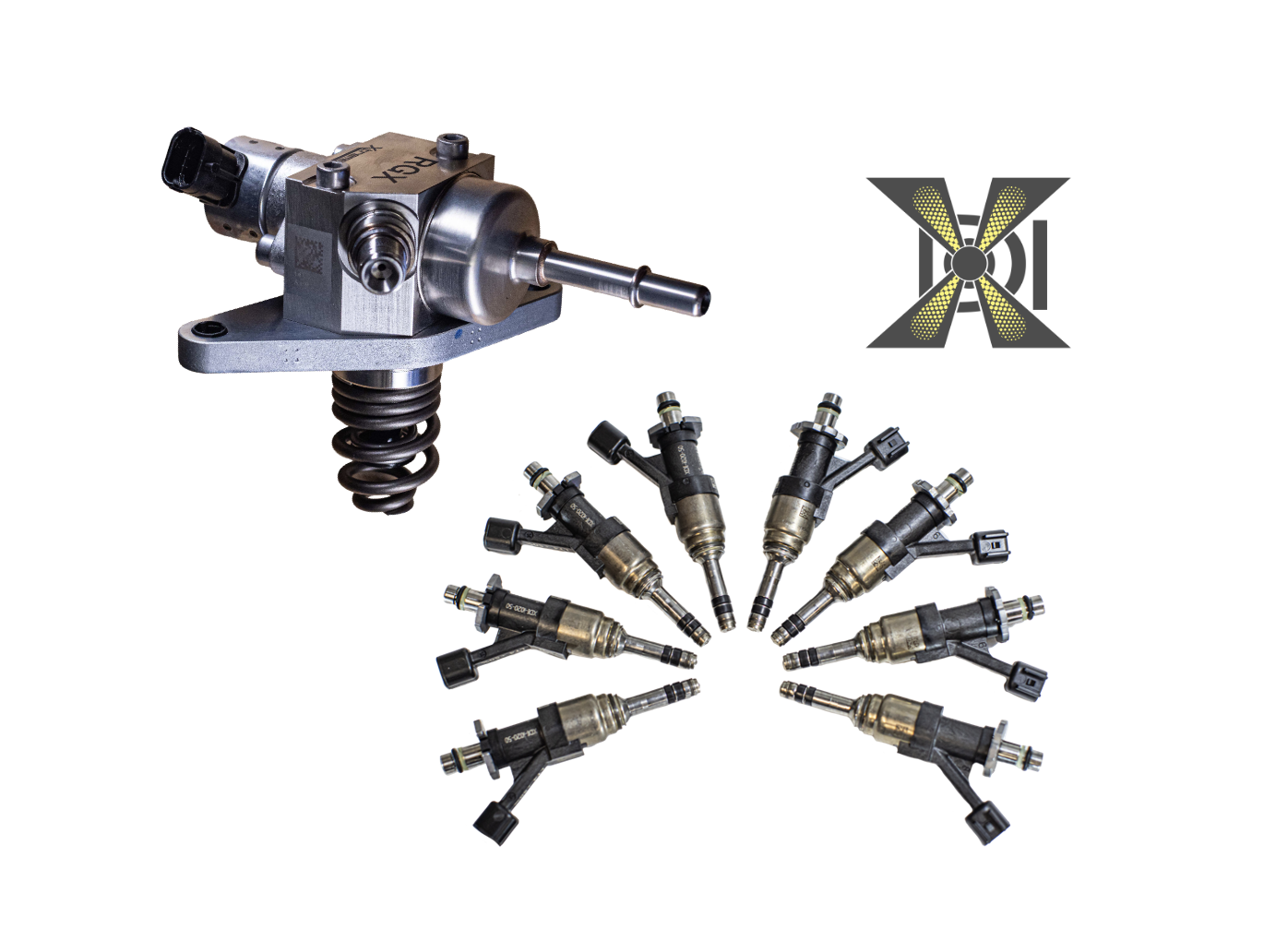
XDI High Flow Di Injectors + Stanadyne RGX HPFP for the Gen. V GM LT Direct Injection Engines (LT1/LT4/L86/LT2)
When it comes to unlocking the true potential of your Gen. V LT engine, fuel flow limitations can be a major roadblock. Even with larger cam fuel lobe, and a low side boost-a-pump, it doesn't take long before the stock mechanical fuel pump, injectors and low-side pump struggle to keep up with the fueling needs from ported blowers, more boost, and E85. Although the benefits of Direct Injection are clear, taking your LT4 from a stock 550rwhp to the all to common 800-1,000rwhp + requires an investment in fuel volume availability. Luckily, the bright minds at Stanadyne (the current OEM manufacture of the LT1 and LT4 HPFP’s) listened to the cries for more volume, more durability, and more lift. And boy were those calls answered with what has been dubbed… the RGX. Using the RGX Pump and XDI 70+ Injectors, many shops have seen DYNO numbers over 1,200 horsepower on 93 octane and 1,100 horsepower on E85. This is why simplicity of upgrading the Di components has been such a popular choice for builds aiming for 1,000rwhp or less.
For those who may not know… XDI’s success on many DI platforms could not have been possible without its founder, Uwe Ostmann’s 25 extensive years in motorsports and DI development. Uwe’s journey started in 2001 when he joined the talented team at Bosch Germany in August 2001. Use spent many of those early years developing Diesel High Pressure Nozzles and overcame many challenges related to tuning a common rail based high pressure fuel system.
After leading the Audi Le Mans LMP1 project for four years including fuel system and controls development and developing several key technologies at Bosch Motorsport in Germany, Uwe came to Bosch Motorsport USA in July 2012.
With Uwe’s talent and determination it didn’t take long before he took over the fuel system development of all OEM race projects based on GDI systems, including the Corvette C7.R, the Ford Daytona Prototype 3.5 EcoBoost and some others that cannot be mentioned in detail. He played a vital role in developing advanced combustion analysis systems and custom fuel systems and controls for several research projects with high pressure fuel systems up to 500bar / 7250psi.
In December 2014 Uwe quit Bosch Motorsport to create XDI. The first and only Bosch Motorsport Dealer and aftermarket supplier in the world with focus on high pressure GDI race projects. Since then Uwe has continued to grow XDI’s technology, effectiveness, and product line to not only support several race programs, on wheels and on water, endurance, drift and drag… but even more importantly… your street car!
Stanadyne RGX High Pressure Fuel Pump;
The RGX HPFP pump is the result of Stanadyne’s dedicated to blend OEM reliability with the performance demands of the aftermarket. As a globally recognized leader in fuel system technology, Stanadyne brought its vast expertise to the table to make this project a success, despite the technical challenges. The desire for higher flow and pressure led Stanadyne to develop a larger volume, 350-bar-capable pump for high-horsepower applications. This third-generation design is externally analogous to the original LT4 pump, but is fitted with a larger 12-milimeter plunger, has important internal modifications, and can accept up to an 8.2mm plunger stroke which allows you to safely run a 38% fuel love up to 9,000rpm.
The new Stanadyne RGX “Race Grade Xtreme” High Pressure Fuel Pump is the next evolution of the proven Stanadyne high-output GDI pump platform used in serious LT-based builds. If the original Goliath was built to push the limit of LT4 direct-injection fuel delivery, the RGX is the refined, more durable, motorsports-focused version designed to survive at higher stroke, higher RPM, and higher fuel demand.
For modified LT4, LT1, L86, LT2, and other Gen V GM applications, the high-pressure fuel pump is one of the most important parts of the entire fuel system. The low side can feed fuel to the engine bay, but the HPFP is what turns that supply into the extreme rail pressure required by direct injection.
When you start adding boost, E85, ported or larger superchargers, the stock fuel system quickly taps out and your biggest bottleneck is the OEM fuel system. This may be the biggest crossroads event of your build. Although this is a deep subject, the quick version is… if you are aiming for more than 1,000rwhp, we suggest looking at the Too High PSI Port Injection solutions. Aiming for 1,000rwhp or less… then upgrading the OEM Di System is the easiest path forward. For those who have chosen to upgrade the Di comportment… this RGX HPFP is for you!
Benefits;
-Direct bolt in for all GM Gen. V LT Engines.
-Larger 12mm bore size for 22% more fuel volume.
-Designed up to 350bar operating pressure or 5,000psi.
-Improved spring design for superior high RPM stability.
-Improved Volumetric efficiency over OEM and competing pumps.
-Capable of up to 8.2mm camshaft lobe lift (equal to a 38% fuel lobe)
XDI Fuel Injectors;
As you know, High-Flowing Fuel Injectors are a major component to High HP builds on a Direct Injected platform like the LT4. Although there are several manufactures to choose from, you can always count on Griffin-Motorsports carrying the highest quality and most trusted products on the market. Which is why we only offer XDI Fuel Injectors. Built upon the foundation of the original GM LT4 injector, they provide a straightforward drop-in installation with minimal adjustments to existing ECU injector characteristics. Each injector undergoes meticulous testing at 100bar and 200bar on OEM equipment at XDI, ensuring precise flow matching within ±0.5% for consistent performance. Tested on fully instrumented engines for superior cylinder distribution and stability at pressures up to 3000psi. These injectors are also fully E85 compatible, making them a versatile choice for performance enthusiasts, and the same injector that can be found on our 915rwhp Shop Car.
XDI 30+ Injector Specifications;
Static Flow Rate: 23 g/sec (2000 cc/min @ 100 bar)
50% more flow than production LT1/L86 injectors (15.3 g/sec)
30% more flow than production LT4 injectors (17.7 g/sec)
Max Rail Pressure: 221 bar / 3000 psi
Fuel Compatibility: all known fuels, all Ethanol blends
Electric Connector: Bosch EV1
Driver Profile: XDI, tuning changes needed
Tuning Support: Standalone, HPT, MoTeC
Idle Stability: 0.8 ms at 20 bar
Static Flow Reference: 10 ms at 100 bar
WOT Performance and Stability: 6 ms at 200 bar
Tuning Support: Compatible with HP Tuners and standalone ECUs
XDI 50+ Injector Specifications;
Static Flow Rate: 26.6 g/sec (2300cc/min @ 100bar)
73% more flow than production LT1/L86 injectors (15.3 g/sec)
50% more flow than production LT4 injectors (17.7 g/sec)
Max Rail Pressure: 221 bar / 3000 psi
Fuel Compatibility: all known fuels, all Ethanol blends
Electric Connector: Bosch EV1
Driver Profile: XDI, tuning changes needed
Tuning Support: Standalone, HPT, MoTeC
Idle Stability: 0.8 ms at 20 bar
Static Flow Reference: 10 ms at 100 bar
WOT Performance and Stability: 6 ms at 200 bar
Tuning Support: Compatible with HP Tuners and standalone ECUs
XDI 70+ Injector Specifications;
Static Flow Rate: 30.1 g/sec (2600cc/min @ 100bar)
70% more flow than production LT4 injectors (17.7 g/sec)
2600 cc/min at 100 bar
3700 cc/min at 200 bar
Max Rail Pressure:193bar / 2800psi
Fuel Compatibility: all known fuels, all Ethanol blends
Electric Connector: Bosch EV1
Driver Profile: XDI, tuning changes needed
Tuning Support: Standalone, HPT, MoTeC
Idle Stability: 0.8 ms at 20 bar
Static Flow Reference: 10 ms at 100 bar
WOT Performance and Stability: 6 ms at 200 bar
Tuning Support: Compatible with HP Tuners and standalone ECUs. Note: Manual cars may experience significant pressure overshoots after shifting, which can cause misfires. Reducing pressure may be necessary in these cases.
Applications;
•High horsepower GM Gen V V8 and V6 direct injection engines including LT4, LT1, L86, L83 and LV3
•E85 conversions of GM Gen V V8 and V6 engines
•2014-2019 C7 Corvette (LT1)
•2015-2019 C7 Z06 Corvette (LT4)
•2016-2022 Camaro SS (LT1)
•2016-2019 CTS-V (LT4)
•2020-2024 CT5-V Black Wing (LT4)
•2017-2023 ZL1 Camaro (LT4)
•2014-2023 Silverado and Sierra with 4.3L LV3, 5.3L L83 and 6.2L L86 engines Not compatible with 6mm shaft injectors
•2015-2023 Suburban, Tahoe, Yukon and Escalade with 5.3L L83 and 6.2L L86 engines Not compatible with 6mm shaft injector
For Higher Output Applications
XDI LT4 +70% Injectors are recommended for naturally aspirated (e.g., Nitro-Methane), low-RPM turbo applications, or centrifugal superchargers when combined with the RGX HPFP. Important: Note; the RGX and +70% injectors may not meet fueling demands for setups with a 2650 TVS or Whipple blower on straight E85 over 1,100rwhp. In these cases, we recommend supplemental fueling (methanol, PFI) around peak torque, or plan on blending down to the E50/60 range. Planning for more than 1,100rwhp? Then ask us how we can help set you up with a TooHigh PSI Port System to supplement your OEM Di System.
*Global B ECUs may require extra tuning on a case-by-case basis as we learn more about new models. We do not accept returns due to tuning difficulties, but we’re happy to assist with any technical inquiries.
All performance figures are estimates only, assume a fully supported setup, and competent tuner who has experience tuning XDI products. Your results will vary. Final rail pressure should be determined by your tuner. Injectors are non-returnable.
Injectors / HPFP may ship direct from XDI.
AS SEEN on our 2026 LT4 Camshaft Shootout
We used this RGX HPFP and XDI 50’s along the, Flag Motorsports MACH V Heads, KONG X-PORT’d blower, and Slick Rick Stage.3 Camshaft, to make over 1,000hp on a 105F Dyno Day! You can read more about that HERE as well as watch the results video HERE, or behind the scenes playlist HERE.
INSTALLATION: As you may be aware, these are high tolerance, high performance parts that require a very detailed installation procedure. Not only do you need to make sure you have a quality fuel filter system of 10-microns or less, you need to ensure your pre-load for the HPFP and fastening procedure is followed perfectly. Please email us if you have any questions info@griffin-motorsports.com
PRE-LOAD and LASH “how to” video can be watched HERE
STANADYNE “pre-load” and LASH Instructions can be found HERE.
XDI - INSTALL INSTRUCTIONS CAN BE DOWNLOADED HERE.
Compatible with Gen 5 GM LT V8 Engines, including:
2014-2019 Chevrolet Corvette C7 (LT1, LT4)
2023-2025 Chevrolet Corvette E-Ray (LT2)
2020-2025 Chevrolet Corvette C8 (LT2)
2016-2023 Chevrolet Camaro SS (LT1)
2017-2023 Chevrolet Camaro ZL1 (LT4)
2014-2017 Chevrolet SS Sedan (LT1)
2015-2023 Cadillac CTS-V (LT4)
2016-2023 Cadillac CT6 (LT4, select trims)
2014-2023 Chevrolet Silverado/GMC Sierra (LT1, select trims)
2015-2023 Chevrolet Suburban/Tahoe (LT1, select trims)
What YOU will need to provide:
Patience and attention to detail for installation... or, someone like that, who you trust with your beloved, adorned, magnificent, earth shaking, alarm sounding LT4 powered beast! If you are doing this DIY (which is not that bad) be sure to get an extra set of hands. These superchargers are alot heavier than some imagine.
We strongly suggest upgrading your cooling system while the blower is out of the car because alot of the labor needed to upgrade is already done with the coolant system bleed and blower out of the car. Email us at info@griffin-motorsports.com to discuss your particular set up if you need help, or want to discuss options.
Although many people have had luck reusing the GM supercharger bolts, Fuel Feed Pipe, and Fuel Crossover Pipe, we strongly suggest you add these items to your cart, as these are ALL one time use only parts.
This package will require tuning. Email us at info@griffin-motorsports.com if you need a recommendation for a remote tuner.
XDI Injectors + Goliath HPFP Bundle
When it comes to unlocking the true potential of your Gen V LT engine, fuel flow limitations can be a major roadblock. Even with larger cam fuel lobe, and a low side boost-a-pump, it doesn't take long before the stock mechanical fuel pump, injectors and low-side pump struggle to keep up with the fueling needs from ported blowers, more boost, and E85. Although the benefits of Direct Injection are clear, taking your LT4 from a stock 550rwhp to the all to common 850rwhp + requires an investment in fuel volume availability. Luckily, the bright minds at Stanadyne (the current OEM manufacture of the LT1 and LT4 HPFP’s) listed to the cries for more volume and answered with what has been dubbed… CLICK HERE TO READ MORE...
from $1,995.00
Why Fuel System Upgrades Matter On The LT4 Platform
The LT4 engine in the Camaro ZL1 is a strong starting point for performance builds. From the factory, the supercharged 6.2L platform delivers impressive power, relying on a high-pressure direct-injection system that can reach roughly 2,900 psi. That level of pressure allows the injectors to deliver fuel directly into the combustion chamber during a very short window in each cycle. At stock power levels, the system performs well, but once airflow increases, the fuel system can quickly become the limiting factor.
As upgrades increase airflow, the engine requires more fuel to maintain a safe air-fuel ratio. When the factory system reaches its limits, datalogs typically show fuel pressure beginning to drop at higher RPM while injector duty cycle climbs close to its maximum. This often appears after modifications that increase boost or airflow, such as upgrading the LT4 supercharger. When airflow increases, but fuel delivery cannot keep pace, the ECU begins to pull power to protect the engine.
This is where fuel system upgrades come into play. Components like the Goliath High Pressure Fuel Pump and XDI injectors increase both fuel volume and injection capacity, so the LT4 can support higher power levels without pressure drop or injector limitations. Many owners also monitor fuel pressure and engine data using tools like ZL1 gauges during tuning or track sessions to make sure the system is performing as expected.
Goliath High Pressure Fuel Pump & XDI Injectors: What They Do
Once the LT4 platform exceeds factory airflow levels, the stock fuel system begins to run out of headroom. The Goliath High Pressure Fuel Pump & XDI Injectors are designed to increase the amount of fuel the direct injection system can deliver while maintaining the pressure the ECU expects to see. Instead of fuel pressure tapering off in the upper RPM range, these components keep the system delivering strongly where performance builds need it most.
The Goliath pump focuses on increasing high-pressure fuel volume while operating within the LT4 direct-injection architecture. More pump capacity means the system can maintain commanded pressure during heavy loads and high-RPM pulls. The XDI injectors complement that increase in volume by delivering a larger amount of fuel during each injection event. Together, they expand the usable fueling window of the engine, enabling higher boost levels, airflow upgrades, and aggressive tuning strategies to be safely supported.
On many builds, the fuel system is only one piece of the larger performance puzzle. As power increases, we typically see owners pairing fuel upgrades with airflow improvements and other camaro zl1 aftermarket parts that help the entire system work together. The goal is not just adding parts; it is creating a setup where airflow, fueling, cooling, and monitoring all scale with the car's power level.
Fuel Flow And Pressure: Breaking Down The Engineering
Direct-injection systems like the LT4 operate very differently from traditional port-injection setups. Fuel is delivered directly into the combustion chamber at extremely high pressure, often approaching 3,000 psi under load. That pressure allows the fuel to atomize properly inside the cylinder during a very short injection window that occurs while the piston is already moving through the compression stroke. When airflow increases due to a boost or engine upgrades, the system has to deliver more fuel during the same narrow window.
The limitation in the factory setup usually appears in two places. First, the high pressure pump can only move a certain volume of fuel per camshaft revolution. As engine speed increases, the pump reaches a point at which it cannot maintain the commanded pressure. Second, the injectors have a maximum flow rate and pulse width limit. Once the injectors reach their duty cycle ceiling, the ECU cannot command additional fuel even as airflow continues to increase.
This is why the Goliath High Pressure Fuel Pump and XDI injectors work as a paired upgrade. The pump increases the available high pressure fuel volume entering the rail, while the injectors are capable of delivering a larger amount of fuel during each injection event. Instead of fuel pressure falling off in the upper RPM range, the system maintains consistent delivery, which is critical for engines running increased boost or larger airflow packages.
Fuel delivery also interacts closely with temperature management. Higher power levels generate more heat in the engine bay and intake system, which can influence overall performance. That is why many performance builds also incorporate upgrades such as zl1 cooling mods to help manage temperatures during repeated pulls, track sessions, or extended high-load driving.
Stock LT4 Fuel System vs Upgraded Components
The factory LT4 fuel system was engineered for the stock power level of the Camaro ZL1, which sits around 650 horsepower at the crank. At that level, the high pressure pump and injectors provide enough fuel to maintain proper air-fuel ratios under boost. The system is efficient and well-calibrated from the factory. The limitation occurs when airflow exceeds what the stock system was designed to support.
On modified LT4 builds, tuners typically start seeing fuel pressure drop in the upper RPM range, around 5,500 to 6,500 RPM. Datalogs will show the ECU commanding high fuel pressure, but the actual pressure begins to taper off as the pump reaches its mechanical limit. At the same time, the injector duty cycle increases as the system tries to deliver more fuel in a very small injection window. This is the point at which the factory pump and injectors are simply operating at their limits.
Upgrading to the Goliath High Pressure Fuel Pump and XDI injectors increases both sides of the equation. The pump delivers greater higher pressure fuel volume to the rail, and the injectors can flow a larger amount of fuel during each injection event. Instead of the system struggling at higher RPM, the upgraded setup maintains stable pressure and injector headroom as airflow increases. That additional fueling capacity becomes important for builds that include larger supercharger setups, camshaft upgrades, or other performance components commonly found in the camaro zl1 parts ecosystem.
Supporting Mods That Help The Fuel System Perform
Fuel system upgrades rarely work in isolation. Once an LT4 build gains additional fueling capacity, airflow, and heat management become more important to maintain consistent performance. Supporting upgrades help the Goliath High Pressure Fuel Pump and XDI injectors operate within a balanced system where airflow, temperature, and monitoring all stay within safe ranges:
Cooling Upgrades For Heat Management
Higher horsepower levels generate additional heat in the engine bay and intake system. During repeated pulls or track driving, rising intake air temperatures can reduce performance and place more stress on engine components. This is why many LT4 builds add improved heat exchangers and radiators as part of their zl1 cooling mods setup.
Cooling upgrades help maintain stable intake temperatures during extended driving sessions. Keeping temperatures under control allows the fuel system to deliver consistent fueling without the ECU reducing power due to thermal conditions.
Monitoring Engine And Fuel Data
As power increases, monitoring engine data becomes much more important. Tracking parameters such as boost pressure, fuel pressure, and temperature gives owners a clear picture of how their setup performs during real driving conditions.
Many enthusiasts install additional monitoring tools like zl1 gauges so they can watch fuel pressure and other critical data points during tuning sessions or track runs. Having that visibility helps identify potential issues early and provides valuable feedback when adjusting the setup.
Airflow And Power Supporting Components
Increasing fuel capacity opens the door for additional airflow upgrades across the platform. Components such as improved intake systems, supercharger upgrades, and other Camaro ZL1 aftermarket parts allow the engine to move more air while the upgraded fuel system keeps the air-fuel ratio balanced.
When airflow, cooling, and fueling upgrades are planned together, the LT4 platform becomes far better able to support higher-horsepower builds. The key is building a system where each component complements the others rather than pushing one area beyond its limits.
Installation Overview And Compatibility
Upgrading the fuel system on the LT4 platform requires careful installation and proper calibration so the engine management system can fully utilize the added fuel capacity. The Goliath High Pressure Fuel Pump and XDI injectors are designed to work within the factory direct injection architecture, but installation still requires mechanical precision and tuning support. Accessing the high pressure pump typically involves working around the supercharger and intake components, while injector replacement requires removing the fuel rails and installing new injectors with proper sealing and torque specifications. For experienced enthusiasts or performance shops, the process generally takes around three to five hours, depending on the vehicle’s current setup and supporting modifications.
Once the hardware is installed, ECU tuning is required. Larger injectors and increased pump capacity change how the engine delivers fuel across the RPM range, so tuners must adjust injector data, pressure targets, and fueling tables to match the upgraded components. After calibration, the system can maintain stronger fuel pressure at higher RPM and support builds that include supercharger upgrades, camshaft changes, and other performance modifications commonly found across the Camaro ZL1 platform. For builds pushing serious horsepower, a Stanadyne / XDI RGX HPFP pairs perfectly with a matching set of high-flow XDI injectors.
Real World Performance Results
Once the Goliath High Pressure Fuel Pump and XDI injectors are installed and properly calibrated, the difference shows up clearly in datalogs and real driving conditions. On modified LT4 builds, the most noticeable change is stable fuel pressure at higher RPM. Instead of pressure dropping as the engine approaches the top of the powerband, the upgraded system maintains the commanded pressure while airflow and boost increase.
In many performance builds we review, the factory fuel system begins to show limitations once horsepower exceeds the stock configuration. Tuners often see the injector duty cycle approaching its limit and the fuel pressure tapering off during wide-open-throttle pulls. With the upgraded pump and injectors in place, those datalogs typically show greater injector headroom and consistent pressure across the upper RPM range, allowing tuners to maintain the correct air-fuel ratio under higher load.
The real benefit appears when the entire system works together. Builds that combine improved airflow, cooling support, and upgraded fueling tend to deliver the most consistent performance during street driving, dyno pulls, and track sessions. The goal is not just achieving higher peak horsepower, but also maintaining reliable fuel delivery across the entire RPM range as power levels increase. Any high-flow fuel system upgrade should be paired with a Fuel Filter Kit to keep contaminants away from your new pump and injectors. A high-pressure fuel pump upgrade pairs directly with High Flow LT4 Fuel Injectors For 6Th Gen Camaro to support increased horsepower goals.
Frequently Asked Questions About Goliath High Pressure Fuel Pump & XDI Injectors
-
Most LT4 builds begin considering upgraded fueling once power levels move beyond the stock configuration, especially when airflow upgrades significantly increase boost or engine demand. High-horsepower builds with upgraded superchargers, camshafts, or ported heads often benefit from the additional fuel capacity these components provide.
-
It can be used with stock injectors, but the full benefit is achieved when paired with higher-capacity injectors like XDI units. The pump increases the fuel volume, while the injectors determine how much fuel actually enters the combustion chamber during each injection cycle.
-
When properly calibrated via ECU tuning, upgraded injectors typically maintain a stable idle. Accurate injector characterization data allows the ECU to manage fuel delivery correctly during low-load and idle conditions.
-
Some higher-horsepower builds add support for low-pressure fuel systems, such as upgraded pumps or voltage boosters. The exact requirement depends on power goals and the vehicle's overall configuration.
-
Stable fuel pressure allows the ECU to deliver the correct amount of fuel during high load conditions. When pressure drops unexpectedly, the engine can run lean, increasing combustion temperatures and potentially stressing the engine.
-
Yes, fueling upgrades are generally compatible with both transmission configurations. The primary factors are the engine setup and airflow demand, rather than the transmission type.
-
Fuel economy during light-throttle driving typically remains similar to stock when tuning is properly calibrated. The additional fuel capacity primarily becomes active at higher load conditions, when the engine demands more fuel.
-
Routine maintenance remains similar to stock fuel systems. Clean fuel, proper filtration, and regular system checks help maintain long-term reliability of high-pressure injection components.
-
Many high-performance builds use upgraded fueling components to support ethanol blends, which require significantly more fuel volume compared to standard pump gasoline. Exact compatibility depends on the full fuel system setup and tuning strategy.
-
Additional sensors are not always required, but many enthusiasts add monitoring tools to observe fuel pressure, boost levels, and engine temperatures while tuning or driving aggressively.