
Stanadyne / XDI RGX HPFP: The Next Evolution of LT Fueling Performance
As horsepower increases on the LT platform, one system becomes the bottleneck faster than almost anything else: Fuel delivery. And on modern direct injection engines like the LT1, LT4, the high-pressure fuel pump is at the center of that limitation.
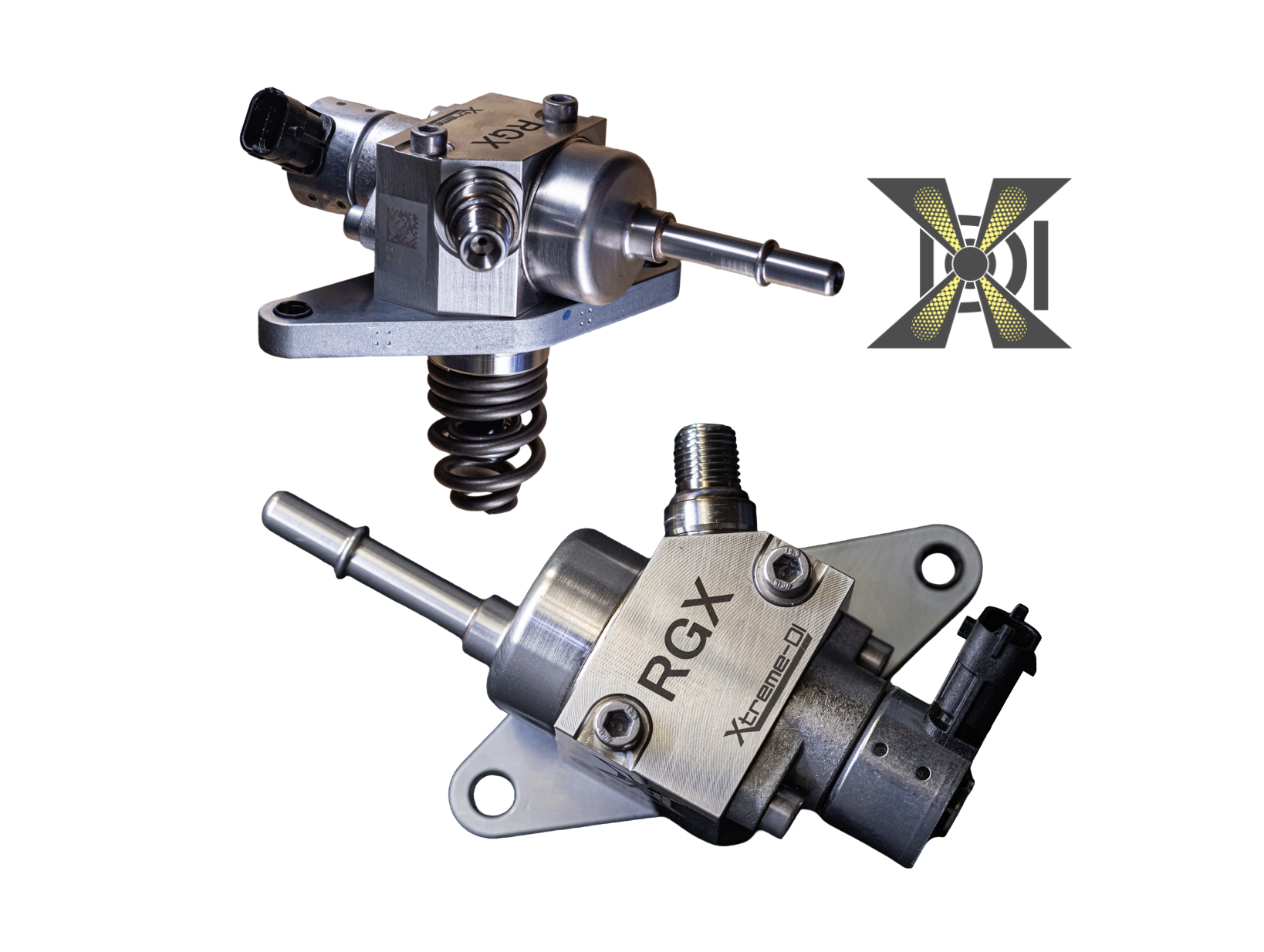
XDI / Stanadyne RGX HPFP for the Gen. V GM LT Direct Injection Engines (LT1/LT4/L86/LT2)
When it comes to unlocking the true potential of your Gen. V LT engine, fuel flow limitations can be a major roadblock. Even with larger cam fuel lobe, and a low side boost-a-pump, it doesn't take long before the stock mechanical fuel pump, injectors and low-side pump struggle to keep up with the fueling needs from ported blowers, more boost, and E85. Although the benefits of Direct Injection are clear, taking your LT4 from a stock 550rwhp to the all to common 800-1,000rwhp + requires an investment in fuel volume availability. Luckily, the bright minds at Stanadyne (the current OEM manufacture of the LT1 and LT4 HPFP’s) listened to the cries for more volume, more durability, and more lift. And boy were those calls answered with what has been dubbed… the RGX. Using the RGX Pump and XDI 70+ Injectors, many shops have seen DYNO numbers over 1,200rwhp on 93+ octane and 1,100rwhp on E85. This is why simplicity of upgrading the Di components has been such a popular choice for builds aiming for 1,000rwhp or less.
The new Stanadyne RGX “Race Grade Xtreme” High Pressure Fuel Pump is the next evolution of the proven Stanadyne high-output GDI pump platform used in serious LT-based builds. If the original Goliath was built to push the limit of LT4 direct-injection fuel delivery, the RGX is the refined, more durable, motorsports-focused version designed to survive at higher stroke, higher RPM, and higher fuel demand.
For modified LT4, LT1, L86, LT2, and other Gen V GM applications, the high-pressure fuel pump is one of the most important parts of the entire fuel system. The low side can feed fuel to the engine bay, but the HPFP is what turns that supply into the extreme rail pressure required by direct injection.
When you start adding boost, E85, ported or larger superchargers, the stock fuel system quickly taps out and your biggest bottleneck is the OEM fuel system. This may be the biggest crossroads event of your build. Although this is a deep subject, the quick version is… if you are aiming for more than 1,100rwhp, we suggest looking at the Too High PSI Port Injection solutions. Aiming for 1,100rwhp or less… then upgrading the OEM Di System is the easiest path forward. For those who have chosen to upgrade the Di comportment… this RGX HPFP is for you!
That is where the RGX comes in
The RGX is based on Stanadyne’s improved large-plunger Goliath architecture, but adds several key refinements aimed at durability, high-RPM stability, and consistent high-pressure output under aggressive conditions. Stanadyne describes the RGX as part of its GX Series of purpose-built GDI performance pumps, not simply a modified OE service pump.
Why the HPFP Matters on an LT4
The LT4 uses gasoline direct injection. That means fuel is injected directly into the combustion chamber at very high pressure. Unlike port injection, the injector has a very short window to deliver fuel, especially at high RPM.
As horsepower rises, three things happen:
Fuel demand increases.
Injection window gets tighter.
Rail pressure becomes harder to maintain.
This is especially true on E85 or ethanol blends. Ethanol requires approx. 30% more fuel volume than gasoline for the same air mass, so a pump that works fine on pump gas can become undersized quickly once the vehicle is tuned on to an E50 blend or higher.
The factory LT4 pump is a strong OEM pump. In fact, Stanadyne identifies the SP1550, commonly referred to as the LT4 pump, as one of the largest-displacement OEM GDI fuel pumps used in production automotive applications. But the RGX is in a different category.
OEM LT4 HPFP vs. Stanadyne RGX HPFP
1. OEM LT4 HPFP / Stanadyne SP1550
The factory LT4 pump is already a serious piece. Stanadyne lists the SP1550, commonly referred to as the LT4 pump, with an 11.5 mm plunger, 1,550 mm³/rev delivery at 200 bar, a 3-lobe camshaft, and 6.0 mm stroke at 2,400 pump RPM.
That is why the LT4 pump became such a popular upgrade for LT1, L86, and other Gen V builds. It flows more than the LT1-style SP1250 pump and supports higher-performance factory applications like the Z06, ZL1, CTS-V, and LT4 crate engine platforms.
But for high-horsepower builds, especially ethanol-fed boosted combinations, the OEM LT4 pump eventually runs out of volume.
Best for: Basic bolt-on LT4 builds with mild ethanol content builds.
Power Limitations: Approx. 700-750rwhp on E85 or 800-850rwhp on Pump Gas.
3. New Stanadyne RGX HPFP
The original Goliath was Stanadyne’s answer to the demand for more pressure and more flow. It moved from the 11.5 mm LT4 plunger to a larger 12 mm plunger, added internal modifications, and could accept up to an 7.5 mm plunger stroke.
The RGX is the improved version of the Goliath concept. Stanadyne describes it as part of the new GX Series, built directly on the Goliath SP2100 platform but refined for motorsports use, high stroke, high speed, and long-term durability.
Compared to the LT4 SP1550 pump, Stanadyne states the Goliath / RGX delivers approximately 22% more volume than the SP1550 (OEM LT4 HPFP) and about 50% more volume than the SP1250 (LT1 HPFP).
This made the Goliath a major step forward for serious DI-only or DI-heavy LT builds. This is the exact reason we chose the XDI Goliath / RGX for our 915rwhp Shop Car.
Best for: Higher Boost / Max Effort Builds that want to maximum the Di fuel system.
Power Limitations:Approx. 950-1,100rwhp on E85 or 1,100-1,200rwhp on Pump Gas.
What the Numbers Actually Mean
Plunger Diameter
The OEM LT4 pump uses an 11.5 mm plunger. The Goliath and RGX use a larger 12 mm plunger. That may not sound like a massive change, but plunger area matters. A larger plunger moves more fuel per stroke, especially when combined with increased fuel lobe lift.
In simple terms:
Bigger plunger = more fuel displacement potential.
More stroke = more fuel moved per pump revolution.
Better spring/follower control = better stability at high RPM.
That is why the RGX is not just about one number. It is about displacement, lift capability, spring control, internal flow efficiency, and durability working together.
Volume Delivery
The factory LT4 SP1550 pump is listed at 1,550 mm³/rev at 200 bar. The RGX is listed at 2,110.9 mm³/rev at 3,500 pump RPM, 200 bar, and 7.85 mm cam lift.
That puts the RGX in the same large-displacement category as the Goliath, but with the updated design features that matter for stability and life.
The takeaway is simple:
The OEM LT4 pump is good. The Goliath flowed more.
The RGX is the better-developed, more durable AEPX version of the high-flow concept.
Pressure Capability
The OEM LT4 pump is referenced by Stanadyne at 200 bar. The Goliath was developed for 350 bar capability. The RGX is offered in 200 bar and 350 bar variants, depending on application.
Higher pressure does not automatically mean more horsepower by itself. What matters is maintaining commanded rail pressure under load.
When rail pressure drops, the ECU and tuner have fewer options. Injector pulse width increases, injection timing can become less ideal, and the fuel system may no longer support the desired airflow safely.
A stronger HPFP gives the tuner more control. The RGX maintains performance up to 14,000 pumps per minute (which equates to 9,333 engine RPM). So on a typical LT4 spinning 6,600–7,500 RPM, the RGX has significant operating headroom.
That matters because fuel pumps do not just fail from flow demand. They can also struggle from mechanical instability, follower control, spring control, high lift, and high cycle speed. The RGX design specifically addresses those areas.
Why the RGX Is Better Than the Old Goliath
The original Goliath was about fuel volume and pressure. The RGX is about fuel volume, pressure, stability, and durability.
The key improvements are:
Improved Goliath Large-Plunger Architecture
The RGX keeps the big 12 mm plunger architecture that made the Goliath powerful, but Stanadyne refined the design for more demanding applications.
New Spring and Spring Seat Design
At high RPM and high lift, the pump follower must stay in control. If the spring system cannot maintain stability, the pump can lose consistency or suffer accelerated wear. The RGX uses an updated spring and spring seat design to improve high-RPM stability.
Nested Return Spring Cam Follower System
Stanadyne specifically calls out a nested return spring cam follower system for the RGX. This is not just a marketing phrase. In a high-lift GDI pump, spring control is critical because the pump must accurately follow the cam lobe under extreme load and speed.
Optimized Internal High-Flow Fuel Paths
More plunger size does not help if the fuel path becomes a restriction. The RGX adds optimized internal flow paths to support consistent high-pressure output.
Plunger and Retainer Optimized for Higher Lift
The RGX plunger and retainer has been optimized for lift up to 8.2 mm (38% fuel lobe)
Finite Element Validated Structural Design
Stanadyne lists the RGX with finite-element-validated structural design. That matters because higher pressure and larger plunger area increase mechanical load. A pump body, retainer, spring system, and internal components have to survive that load repeatedly.
Consistent Output at Extreme RPM
The RGX was designed to maintain high-pressure output at high RPM, which is exactly where modified LT4 engines need the help.
Who Needs the RGX?
The RGX is not for a stock car that will never be pushed. It is for the customer who is building beyond the comfort zone of the factory LT4 pump.
You should strongly consider the RGX if your build includes: Kong X-Ported 1.7L Supercharger or a larger displacement supercharger. E85, Camshaft with larger fuel lobe, Larger injectors, Higher RPM limit 700-1,000rwhp horsepower goals.
INSTALLATION: As you may be aware, these are high tolerance, high performance parts that require a very detailed installation procedure. You need to ensure your pre-load for the HPFP and fastening procedure is followed perfectly. Please email us if you have any questions info@griffin-motorsports.com
PRE-LOAD and LASH “how to” video can be watched HERE
STANADYNE “pre-load” and LASH Instructions can be found HERE.
XDI - INSTALL INSTRUCTIONS CAN BE DOWNLOADED HERE.
Compatible with Gen 5 GM LT V8 Engines, including:
2014-2019 Chevrolet Corvette C7 (LT1, LT4)
2023-2025 Chevrolet Corvette E-Ray (LT2)
2020-2025 Chevrolet Corvette C8 (LT2)
2016-2023 Chevrolet Camaro SS (LT1)
2017-2023 Chevrolet Camaro ZL1 (LT4)
2014-2017 Chevrolet SS Sedan (LT1)
2015-2023 Cadillac CTS-V (LT4)
2016-2023 Cadillac CT6 (LT4, select trims)
2014-2023 Chevrolet Silverado/GMC Sierra (LT1, select trims)
2015-2023 Chevrolet Suburban/Tahoe (LT1, select trims)
AS SEEN on our 2026 LT4 Camshaft Shootout
We used this RGX HPFP along the, Flag Motorsports MACH V Heads, KONG X-PORT’d blower, Slick Rick Stage.3 Camshaft, along with some XDI 50+ injectors, to make over 1,000hp on a 105F Dyno Day! You can read more about that HERE as well as watch the results video HERE, or behind the scenes playlist HERE.
XDI / Stanadyne Gen. V GM LT RGX HPFP
When it comes to unlocking the true potential of your Gen. V LT engine, fuel flow limitations can be a major roadblock. Even with larger cam fuel lobe, and a low side boost-a-pump, it doesn't take long before the stock mechanical fuel pump, injectors and low-side pump struggle to keep up with the fueling needs from ported blowers, more boost, and E85. Although the benefits of Direct Injection are clear, taking your LT4 from a stock 550rwhp to the all to common 800-1,000rwhp + requires an investment in fuel volume availability.
from $2,000.00
The Fueling Problem with High Horsepower LT Builds
The OEM LT4 high-pressure fuel pump was extremely advanced for a factory system.
But it was never designed for:
Large camshafts
Ethanol blends
Ported or larger blowers
As airflow increases, fuel demand rises rapidly.
Eventually the factory pump can no longer:
Maintain commanded rail pressure
Deliver enough fuel volume
Keep up at high RPM
The result:
Fuel pressure drop
Lean conditions
Timing reduction
Inconsistent power
Potential engine damage
Why Direct Injection Fueling Is So Challenging
Modern direct injection systems operate under enormous pressure.
Unlike traditional port injection:
Fuel must be injected directly into the combustion chamber
Injection windows are extremely short
Pressure stability becomes critical at high RPM
This creates a massive challenge on high-power builds.
Because making fuel pressure is only half the battle.
Maintaining stable pressure and volume at high RPM is what separates a real fuel system from an unstable one.
The Evolution from LT4 → Goliath → RGX
To understand why the RGX matters, you first need to understand the evolution of LT fueling.
OEM LT4 Pump
The factory LT4 pump represented a major improvement over earlier LT1 systems, using an 11.5mm plunger and higher fuel delivery capability.
But eventually modified combinations exceeded its capacity.
The Original Goliath Pump
The Stanadyne Goliath was developed to address that limitation with:
Larger 12mm plunger architecture
Increased volumetric delivery
Higher pressure capability
The Goliath dramatically expanded fueling capability for high horsepower LT builds, but after a few years, was ready for some upgrades.
The New RGX Pump
Now comes the next evolution:
The Stanadyne RGX.
The RGX is not simply a modified OEM service pump.
It is a purpose-built high-performance GDI fuel pump engineered specifically for extreme horsepower applications.
What Makes the RGX Different
The RGX incorporates major improvements over previous-generation high-pressure pumps.
According to Stanadyne and XDI, the RGX includes:
Improved large-plunger architecture
Revised spring and spring seat design
Optimized internal flow paths
Improved high-RPM pressure stability
Support for higher fuel lobe lift profiles
Enhanced durability under extreme load
This matters because high-RPM fueling stability has always been one of the biggest challenges in direct injection systems.
The Importance of High RPM Fuel Stability
Many pumps can produce fuel pressure momentarily.
The real challenge is maintaining:
Stable pressure
Stable volume
Stable injector operation
At:
High RPM
High boost
High ethanol content
Extreme airflow levels
The RGX was specifically engineered to maintain consistent high-pressure output at extreme RPM levels.
That translates directly into:
Safer tuning
More stable fueling
More repeatable power
Why Fuel Pressure Matters So Much on LT Engines
On a boosted LT engine, fuel pressure directly impacts:
Injector performance
Fuel atomization
Cylinder cooling
Knock resistance
When rail pressure drops:
Fuel delivery becomes inconsistent
Combustion quality suffers
Knock sensitivity increases
That forces the tuner to:
Pull timing
Add safety margins
Reduce power potential
Proper fueling allows the engine to safely support more airflow and power.
The Role of Camshaft Fuel Lobe Lift
One of the biggest limitations in LT fueling is pump stroke.
The RGX was designed to support:
High-lift fuel lobes
Increased plunger stroke capability
Greater volumetric efficiency
Stanadyne specifically engineered the RGX architecture around higher-stroke GDI applications and extreme load conditions.
This is critical for modern camshaft combinations designed around maximizing DI fueling.
How Much Fuel Can the RGX Support?
According to XDI and Stanadyne testing:
The RGX supports over 1,000rwhp on E85 and over 1,200rwhp on pump gas.
Actual capability depends on:
Fuel type
Injector size
Boost level
Camshaft fuel lobe
Overall system design
But the key takeaway is this:
The RGX dramatically extends the usable limits of direct injection fueling on LT platforms.
Why Ethanol Increases Fuel Demand
E85 and ethanol blends are excellent for:
Knock resistance
Cooling
Power potential
But ethanol requires substantially more fuel volume than gasoline.
That means:
The fuel system reaches its limit sooner
Rail pressure becomes harder to maintain
Pump demand increases dramatically
This is why upgraded high-pressure fueling becomes mandatory on serious ethanol builds.
Why Cheap Fueling Solutions Become Dangerous
This is where people get into trouble.
Some fueling solutions focus only on:
Peak pressure numbers
Marketing claims
Short dyno pulls
But they ignore:
Long-term durability
High RPM stability
Structural integrity
Stanadyne specifically notes that modified OEM pumps face significant operational challenges at extreme pressures and stroke levels, which led to the development of purpose-built solutions like the RGX.
Why the RGX Is a Major Step Forward
The RGX is designed around:
Real airflow demand
Real RPM stability
Real high-horsepower operation
Key improvements include:
Improved internal flow paths
Improved spring architecture
Enhanced high-lift capability
Better high-pressure consistency
This creates:
More stable tuning windows
Improved reliability
More repeatable performance
Why Buy from Griffin Motorsports
You’re not just buying a fuel pump.
You’re getting:
A proven high-performance fueling solution
Real-world LT platform experience
Guidance based on actual combinations and results
Fueling is one of the most critical—and most expensive—areas to get wrong.
The goal is not simply “making power.”
It’s making reliable, repeatable power safely.
Who Needs an RGX HPFP?
If your build includes:
Ethanol blends
Larger superchargers
Ported blowers
Camshaft upgrades
Increased boost
800+ horsepower goals
You should strongly consider upgraded high-pressure fueling.
The higher the airflow demand, the more critical stable fuel delivery becomes.
Final Thoughts
Modern LT engines are capable of incredible power—but direct injection fueling becomes a major limitation very quickly.
Shop our High Flow LT4 Fuel Injectors For 6Th Gen Camaro collection alongside a matching Stanadyne HPFP for a complete fuel system build.
The new Stanadyne / XDI RGX HPFP was developed specifically to address:
High RPM instability
Fuel volume limitations
Extreme horsepower demand
By improving:
Pressure stability
Volumetric efficiency
Durability
High-lift capability
The RGX represents the next evolution in serious LT fueling performance.
Frequently Asked Questions About Stanadyne / XDI RGX HPFP
-
The RGX is a next-generation high-pressure fuel pump designed for high horsepower direct injection applications.
-
It uses larger plunger architecture, improved internal flow design, and greater high-RPM fueling capability.
-
Yes, it includes multiple design improvements focused on stability, flow efficiency, and durability.
-
As airflow and boost increase, fuel demand quickly exceeds factory pump capability.
-
The engine can run lean, lose power, and become more knock sensitive.
-
Injection windows become extremely short while fuel demand increases dramatically.
-
Yes, ethanol blends require significantly more fuel volume than gasoline.
-
Yes, it was specifically designed for high-demand performance applications including ethanol use.
-
Rail pressure is the high-pressure fuel supplied to the direct injectors.
-
Stable pressure improves fueling consistency, combustion quality, and tuning safety.
-
The fuel lobe on the camshaft drives the high-pressure fuel pump.
-
Yes, higher fuel lobe lift can increase pump stroke and fuel delivery.
-
Depending on the combination and fuel type, yes.
-
Poorly engineered pumps may struggle with durability and pressure stability under extreme conditions.
-
Because proper fueling requires more than parts—it requires real platform knowledge and proven system understanding.