
High Flow LT4 Fuel Injectors For 6Th Gen Camaro
The Camaro ZL1 Heat Extraction Hood Bracket plays an important role in securing and supporting the hood's heat extractor assembly while helping maintain proper airflow through the engine bay. Whether you're replacing a damaged factory bracket, restoring your ZL1 to OEM condition, or upgrading components during a hood modification project, choosing the right bracket ensures proper fitment, durability, and long-term performance.
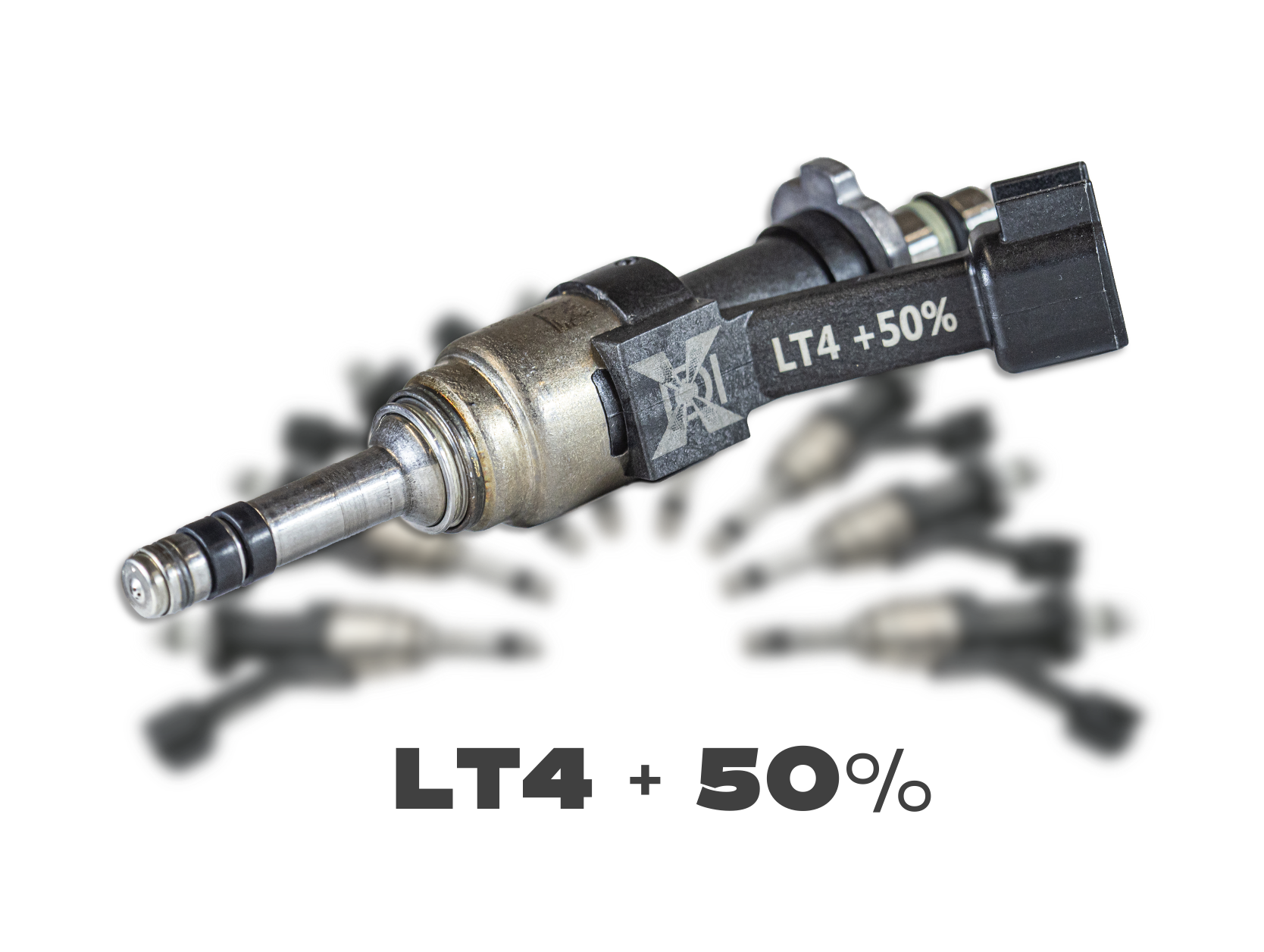
XDI 50+ High Flow Injectors
As you know, High-Flowing Fuel Injectors are a major component to High HP builds on a Direct Injected platform like the LT4. Although there are several manufactures to choose from, you can always count on Griffin-Motorsports carrying the highest quality and most trusted products on the market. Which is why we only offer XDI Fuel Injectors. Built upon the foundation of the original GM LT4 injector, they provide a straightforward drop-in installation with minimal adjustments to existing ECU injector characteristics. Each injector undergoes meticulous testing at 100bar and 200bar on OEM equipment at XDI, ensuring precise flow matching within ±0.5% for consistent performance. Tested on fully instrumented engines for superior cylinder distribution and stability at pressures up to 3000psi, these injectors are fully E85 compatible, making them a versatile choice for performance enthusiasts.
For those who may not know… XDI’s success on many DI platforms could not have been possible without its founder, Uwe Ostmann’s 25 extensive years in motorsports and DI development. Uwe’s journey started in 2001 when he joined the talented team at Bosch Germany in August 2001. Use spent many of those early years developing Diesel High Pressure Nozzles and overcame many challenges related to tuning a common rail based high pressure fuel system.
After leading the Audi Le Mans LMP1 project for four years including fuel system and controls development and developing several key technologies at Bosch Motorsport in Germany, Uwe came to Bosch Motorsport USA in July 2012.
With Uwe’s talent and determination it didn’t take long before he took over the fuel system development of all OEM race projects based on GDI systems, including the Corvette C7.R, the Ford Daytona Prototype 3.5 EcoBoost and some others that cannot be mentioned in detail. He played a vital role in developing advanced combustion analysis systems and custom fuel systems and controls for several research projects with high pressure fuel systems up to 500bar / 7250psi.
In December 2014 Uwe quit Bosch Motorsport to create XDI. The first and only Bosch Motorsport Dealer and aftermarket supplier in the world with focus on high pressure GDI race projects. Since then Uwe has continued to grow XDI’s technology, effectiveness, and product line to not only support several race programs, on wheels and on water, endurance, drift and drag… but even more importantly… your street car!
AS SEEN on our 2026 LT4 Camshaft Shootout
We used these XDI 50+ injectors, along with the RGX HPFP, Our Stage.II KONG X-Port Package, Flag Motorsports MACH V Cylinder Heads, and the “Slick Rick” Rick Crawford Stage.3 Camshaft to make over 1,000hp on a 105F Dyno Day! You can read more about that HERE as well as watch the results video HERE, or behind the scenes playlist HERE.
Specifications
Static Flow Rate: 26.6 g/sec (2300cc/min @ 100bar)
73% more flow than production LT1/L86 injectors (15.3 g/sec)
50% more flow than production LT4 injectors (17.7 g/sec)
Max Rail Pressure: 221 bar / 3000 psi
Fuel Compatibility: all known fuels, all Ethanol blends
Electric Connector: Bosch EV1
Driver Profile: XDI, tuning changes needed
Tuning Support: Standalone, HPT, MoTeC
Idle Stability: 0.8 ms at 20 bar
Static Flow Reference: 10 ms at 100 bar
WOT Performance and Stability: 6 ms at 200 bar
Tuning Support: Compatible with HP Tuners and standalone ECUs
Requirements
Fuel System Upgrades: In order to get the most from these injectors, we suggest an upgraded low-pressure and high-pressure fuel pumps to reach the full potential of these injectors.
Power Potential and Recommended Combinations (LT4 +50%)
900-1,100rwhp on E50-E85: Use with minimum +38% cam lobe + RGX HPFP + Dual Pump Low-Side.
1,100-1,300rwhp on Pump Gas: Use with minimum +38% cam lobe + RGX HPFP + Dual Pump Low-Side.
Applications
•High horsepower GM Gen V V8 and V6 direct injection engines including LT4, LT1, L86, L83 and LV3
•E85 conversions of GM Gen V V8 and V6 engines
•2014-2019 C7 Corvette (LT1)
•2015-2019 C7 Z06 Corvette (LT4)
•2016-2022 Camaro SS (LT1)
•2016-2019 CTS-V (LT4)
•2020-2024 CT5-V Black Wing (LT4)
•2017-2023 ZL1 Camaro (LT4)
•2014-2023 Silverado and Sierra with 4.3L LV3, 5.3L L83 and 6.2L L86 engines Not compatible with 6mm shaft injectors
•2015-2023 Suburban, Tahoe, Yukon and Escalade with 5.3L L83 and 6.2L L86 engines Not compatible with 6mm shaft injector
*Global B ECUs may require extra tuning on a case-by-case basis as we learn more about new models. We do not accept returns due to tuning difficulties, but we’re happy to assist with any technical inquiries.
All performance figures are estimates only, assume a fully supported setup, and competent tuner who has experience tuning XDI products. Your results will vary. Final rail pressure should be determined by your tuner. Injectors are non-returnable.
Product may ship direct from XDI.
What YOU will need to provide:
Patience and attention to detail for installation... or, someone like that, who you trust with your beloved, adorned, magnificent, earth shaking, alarm sounding LT4 powered beast! If you are doing this DIY (which is not that bad) be sure to get an extra set of hands. These superchargers are alot heavier than some imagine.
We strongly suggest upgrading your cooling system while the blower is out of the car because alot of the labor needed to upgrade is already done with the coolant system bleed and blower out of the car. Email us at info@griffin-motorsports.com to discuss your particular set up if you need help, or want to discuss options.
Although many people have had luck reusing the GM supercharger bolts, Fuel Feed Pipe, and Fuel Crossover Pipe, we strongly suggest you add these items to your cart, as these are ALL one time use only parts.
This package will require tuning. Email us at info@griffin-motorsports.com if you need a recommendation for a remote tuner.
XDI 50+ High Flow Injectors
As you know, High-Flowing Fuel Injectors are a major component to High HP builds on a Direct Injected platform like the LT4. Although there are several manufactures to choose from, you can always count on Griffin-Motorsports carrying the highest quality and most trusted products on the market. Which is why we only offer XDI Fuel Injectors. Built upon the foundation of the original GM LT4 injector, they provide a straightforward drop-in installation with minimal adjustments to existing ECU injector characteristics. Each injector undergoes meticulous testing at 100bar and 200bar on OEM equipment at XDI, ensuring precise flow matching within ±0.5% for consistent performance. Tested on fully instrumented engines for superior cylinder distribution and stability at pressures up to 3000psi, these injectors are fully E85 compatible, making them a versatile choice for performance enthusiasts.
from $2,895.00
XDI High Flow Injectors for LT1 & LT4: Solving the Fueling Limits of the Direct Injection Platform
Modern GM LT engines are incredibly capable.
The LT1 and LT4 platforms respond exceptionally well to:
Boost
Camshaft upgrades
Ethanol blends
Ported blowers
Larger superchargers
But as horsepower increases, one system becomes the limiting factor very quickly:
Fuel delivery.
And on direct injection LT engines, the injectors are one of the most critical parts of the entire fuel system.
Because unlike traditional port injection setups, direct injection injectors must:
Operate at extremely high pressure
Deliver fuel in extremely short injection windows
Maintain precise atomization under massive cylinder pressure
Once injector capacity is exceeded, the engine becomes unstable very quickly.
That’s where XDI High Flow Injectors come in.
The Problem with OEM LT Injectors
The OEM LT1 and LT4 injectors were designed around factory airflow and power levels.
They work well on stock applications.
But once you add:
More boost
More power
Ethanol blends
Fuel demand rises dramatically.
Eventually the injectors can no longer:
Deliver enough fuel volume
Maintain proper pulse width control
Support safe air/fuel ratios at high load
The result:
Lean conditions
Fuel pressure instability
Reduced timing
Inconsistent power
Increased knock sensitivity
And once injector duty cycle becomes excessive, tuning safety margins disappear quickly.
Why Direct Injection Fueling Is So Difficult
Direct injection systems operate very differently than traditional port injection systems.
On LT engines:
Fuel is injected directly into the combustion chamber
Injection occurs under extremely high pressure
Injection timing windows are extremely short at high RPM
That means injectors must:
Deliver enormous fuel volume quickly
Maintain proper atomization
Remain stable under extreme pressure and heat
This becomes especially difficult on:
High RPM combinations
Ethanol builds
Large boost applications
Why Ethanol Changes Everything
E85 and ethanol blends are excellent for:
Knock resistance
Intake charge cooling
Power potential
But ethanol requires significantly more fuel volume than gasoline.
Typically:
E85 requires roughly 30% more fuel volume compared to gasoline
That means injector demand increases dramatically.
This is why many modified LT builds run out of injector long before owners expect.
The Solution: XDI High Flow Injectors
XDI injectors are engineered specifically for high-performance direct injection applications.
Rather than relying on questionable modified OEM injectors, XDI develops injectors designed around:
Increased flow capability
Proper spray pattern behavior
High-pressure stability
Direct compatibility with LT platforms
Available options include:
XDI 30% injectors
XDI 50% injectors
XDI 70% injectors
Each designed to support progressively higher horsepower and fuel demand.
Understanding Injector “Over” Ratings
When an injector is labeled:
30 over
50 over
70 over
That refers to the approximate increase in fuel flow capability over OEM injector capacity.
Example:
A 50% over injector is capable of delivering substantially more fuel volume than the factory LT1 injector under equivalent operating conditions.
This allows the fuel system to:
Support more airflow
Support more boost
Support ethanol blends more effectively
XDI 30% Injectors
Best suited for:
Mild bolt-on combinations
Lower boost setups
Moderate ethanol blends
Ideal for:
Pulley upgrades
Headers and cam combinations
Street-focused performance builds
These provide additional fueling headroom while maintaining excellent drivability characteristics.
XDI 50% Injectors
This is one of the most popular options for serious LT4 builds.
Best suited for:
Ported blower combinations
Larger superchargers
Aggressive ethanol use
High horsepower street cars
The 50 over injectors offer a strong balance between:
Fueling capacity
Tuning flexibility
Street drivability
This is often the sweet spot for many 800–1,000+ horsepower combinations depending on fuel type and overall setup.
XDI 70% Injectors
Designed for:
Extreme horsepower applications
Heavy ethanol use
Large blower and turbo combinations
Best suited for:
Competition builds
Maximum airflow combinations
Advanced fueling systems
At this level:
Fuel demand becomes enormous
Injector stability becomes critical
Proper calibration becomes absolutely mandatory
Why Injector Spray Pattern Matters
One of the biggest misconceptions in fueling is assuming:
“More flow is all that matters.”
It isn’t.
Injector spray pattern and atomization quality are critical.
Poor atomization creates:
Uneven combustion
Reduced efficiency
Increased knock sensitivity
Cylinder imbalance
XDI injectors are designed to maintain proper spray behavior under extreme direct injection pressure conditions.
That matters tremendously for:
Combustion quality
Power consistency
Reliability
Why Proper Calibration Is Critical
Injectors are not plug-and-play horsepower parts.
When injector size changes:
Fuel modeling changes
Injector timing changes
Short pulse behavior changes
Air/fuel calculations change
Without proper calibration:
The car may idle poorly
Drivability may suffer
Fuel trims may become unstable
This is why proper tuning is absolutely critical when upgrading injectors.
Why Bigger Isn’t Always Better
Many people assume they should simply buy the largest injector available.
But oversized injectors can:
Reduce tuning resolution at lower load
Complicate drivability
Increase calibration complexity
The goal is:
Proper injector sizing for the application
Not simply maximum injector size.
That’s why selecting the correct injector for your horsepower goals matters.
The Relationship Between HPFP and Injector Capacity
Injectors and the high-pressure fuel pump work together.
Even large injectors cannot perform correctly if:
Rail pressure falls
The HPFP cannot maintain pressure stability
This is why serious LT fueling systems often combine:
XDI injectors
withUpgraded high-pressure fuel pumps like the Stanadyne / XDI RGX HPFP
Together, they create a complete high-performance direct injection fuel system.
What Happens When Injector Capacity Is Exceeded
This is where engines get damaged.
Once injectors run out of capacity:
Air/fuel ratios become unstable
Fuel delivery falls behind airflow demand
Cylinder temperatures rise
Knock sensitivity increases
The tuner is forced to:
Reduce timing
Reduce boost
Add safety margins
Or risk catastrophic engine damage.
Why Buying the Correct Fueling Components Matters
Fueling is one of the most expensive areas to get wrong.
Cheap or poorly engineered injectors can create:
Spray pattern issues
Calibration instability
Inconsistent fueling behavior
Reliability concerns
The difference between:
A stable 1,000 horsepower build
andAn unstable one
Often comes down to fuel system quality.
Why Buy from Griffin Motorsports
You’re not just buying injectors.
You’re getting:
Real LT platform experience
Guidance based on actual combinations
Proper system recommendations
Access to proven fueling solutions
Every setup is different.
The correct injector depends on:
Horsepower goals
Fuel type
Boost level
Camshaft
Overall fuel system configuration
This is why system-based guidance matters.
Who Needs XDI High Flow Injectors?
If your Camaro has:
Ethanol blends
Increased boost
Ported blower
Larger supercharger
Camshaft upgrades
High horsepower goals
You should strongly evaluate injector capacity before pushing the limits of the OEM system.
The more airflow your engine moves, the more fuel delivery matters.
Final Thoughts
Modern LT engines are capable of incredible power—but fueling limitations appear quickly as modifications increase.
XDI High Flow Injectors help solve one of the biggest bottlenecks in the direct injection system by providing:
Increased fuel flow capacity
Proper atomization
High-pressure stability
Improved fueling headroom
Because making power safely is not just about airflow.
It’s about delivering enough fuel to support it consistently. Explore our Stanadyne / XDI RGX HPFP as the ideal upgrade partner to high flow LT4 fuel injectors for maximum fuel delivery.
Frequently Asked Questions About XDI High Flow Injectors
-
Performance direct injection injectors designed for high horsepower LT engine applications.
-
It refers to the approximate increase in fuel flow capability over OEM LT1 injectors.
-
Higher airflow and ethanol blends dramatically increase fuel demand.
-
Injection windows become extremely short while fuel demand increases significantly.
-
Yes. E85 requires substantially more fuel volume than gasoline.
-
The engine can run lean, lose power, and become more knock sensitive.
-
No. Injectors should be properly matched to the application.
-
Absolutely. Proper calibration is mandatory.
-
It refers to how fuel is atomized and distributed during injection.
-
Better atomization improves combustion quality and consistency.
-
Yes. They are commonly used in high-performance ethanol applications.
-
Often yes, especially on high horsepower builds.
-
That depends on horsepower goals, fuel type, and overall fuel system configuration.
-
Yes. Poor fueling consistency can create lean conditions and knock.
-
Because proper fueling requires more than parts—it requires understanding the entire LT fuel system as a complete package.