
BMR Rear Coilover Lower Control Arms For Zl1 Camaro
The Camaro ZL1 delivers serious performance straight from the factory, but the rear suspension starts working much harder once power, grip, and track use increase. As drivers add coilovers, wider tires, and aggressive alignment settings, the factory suspension links can begin to flex under load. That small amount of movement can affect toe angle, traction, and overall stability during acceleration or corner exit. Upgrading to BMR Rear Coilover Lower Control Arms for ZL1 Camaro helps keep the rear suspension geometry stable, allowing the car to use its available grip more effectively.
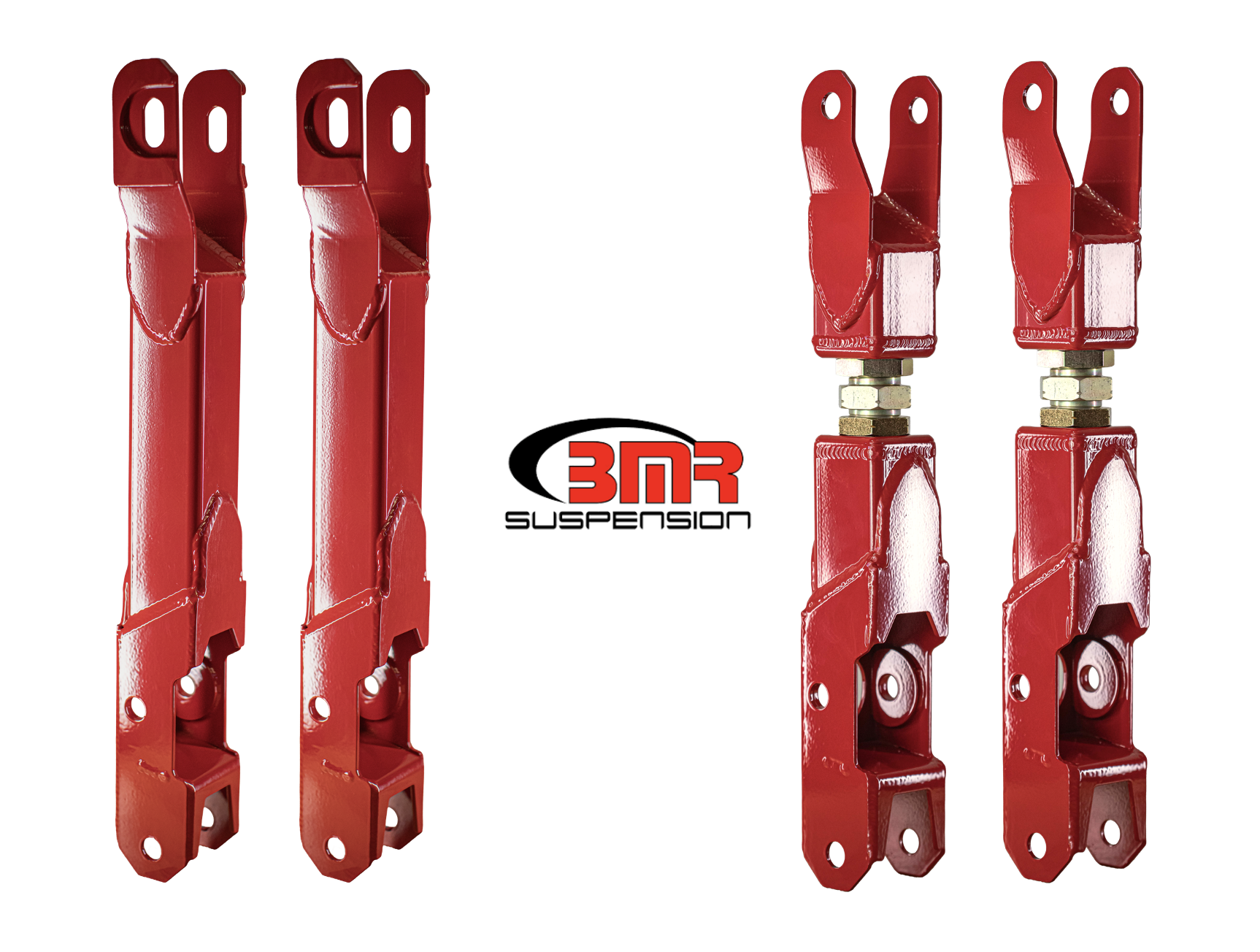
BMR Rear Lower Control Arms – Coilover-Specific (LCA361R) or (LCA632R)
If you’re like me, and you’ve upgraded your 6th-Gen Camaro to a full coilover setup—like the RIDETECH system we helped test and develop—you eventually notice the factory stamped lower control arms staring back at you as the new weak link. They flex, they look awful, and they don’t belong under a car with real suspension geometry.
Fortunately, BMR stepped up with the LCA361 and LCA632. These are purpose-built, coilover-specific lower control arms that deliver strength, precision, cleaner packaging, and a 1-lb reduction in unsprung weight per side (if you choose the non-adjustable like we did for our 1,000hp ZL1 1LE Shop Car. For anyone running coilovers, this upgrade is almost mandatory.
Why Upgrade to the LCA361 or LCA362
Because form, function, and performance should all coexist. These arms solve multiple pain points at once:
-Stiffer, more stable rear suspension, with dramatically reduced arm flex.
-Better access to Ridetech rebound adjusters, thanks to the open coilover-friendly design.
-Cleaner, stronger, more confidence-inspiring hardware, where the stock stamped steel pieces fall short.
-Maintains OEM camber adjustment, using the factory eccentric for easy alignment.
Whether you're carving canyons, launching at the drag strip, or hammering laps on a road course, the LCA361 and LCA362 gives the rear of the car that connected, planted feel coilover users always want—but rarely get with the stock arms.
Vehicle Fitment: 2016–2024 Chevrolet Camaro (LT, SS, 1LE, ZL1)
Requires: Rear coilover conversion (Ridetech, KW, etc.)
Construction: Heavy-duty *2-inch square steel tubing, Precision-welded for minimal deflection under load, Offered in *Red** or Black Hammertone powder coat.
Performance Benefits:
-Eliminates lower control arm flex.
-Improves rear suspension consistency and geometry stability.
-Reduces unsprung weight by 1 lb per side (with non-adjustable version)
-Helps the car put power down sooner and more efficiently.
-Enhances stability in fast sweepers and under heavy braking.
-Provides cleaner shock access and better serviceability.
Finish & Durability:
BMR’s Red and Black Hammertone finishes look incredible and hold up to heat, debris, chemicals, and years of under-car abuse. These aren’t parts you’ll worry about rusting, fading, or fatiguing.
Installation:
Direct bolt-in replacement for OEM lower arms. Uses factory spindle bolt, camber bolt, and typically the coilover’s supplied lower hardware. Install time: 2–3 hours with standard tools (a replacement lower shock bolt and nut may be needed depending on what coil-over you are using) *Alignment required after installation.
BMR 6th Gen. Rear Coilover Lower Control Arms
If you’re like me, and you’ve upgraded your 6th-Gen Camaro to a full coilover setup—like the RIDETECH system we helped test and develop—you eventually notice the factory stamped lower control arms staring back at you as the new weak link. They flex, they look awful, and they don’t belong under a car with real suspension geometry… CLICK HERE TO READ MORE...
from $195.00
Understanding The Weak Points In The Stock Camaro ZL1 Rear Suspension
The sixth-generation ZL1 Camaro already has a capable rear suspension. Magnetic Ride Control and a multi-link layout allow the car to handle 650+ horsepower while maintaining good street manners. For factory power levels and standard tires, the original rear arms perform well.
The situation changes once traction increases. Sticky tires, coilovers, and hard launches place significantly more load on the rear links. The factory-stamped arms can flex under these conditions, sometimes by several millimeters during acceleration or at the corner exit. That movement slightly alters toe angle and wheel position, which can make the rear feel unstable or inconsistent during aggressive driving.
Upgrading the Camaro ZL1 rear suspension arms helps eliminate that unwanted movement. Stronger materials and solid rod ends keep suspension geometry stable under load. Many ZL1 owners reach this point after adding power upgrades such as an LT4 lid upgrade, improving heat management with ZL1 cooling mods, or expanding their build with other Camaro ZL1 aftermarket parts and Camaro ZL1 parts available through Griffin Motorsports.
BMR Rear Lower Control Arms ZL1: Engineering Built For High Load Conditions
The factory lower control arms do their job in normal driving, but aggressive launches and track use quickly expose their limits. Under heavy load, stamped steel arms can flex, allowing small geometry changes that affect traction and stability. On a 650+ horsepower ZL1, even a few millimeters of movement at the suspension links can change how the car plants power.
The BMR rear lower control arms ZL1 upgrade addresses that problem with a much stronger design. BMR uses heavy-duty boxed-steel construction, combined with rod-end connections that eliminate the soft rubber compliance found in factory arms. The result is far less deflection during acceleration, braking, and cornering. In testing, drivers often report more consistent rear grip during corner exit and improved stability during high-speed transitions.
For ZL1 owners building a complete performance setup, suspension upgrades usually follow power and monitoring upgrades. Many drivers add components like ZL1 gauges to monitor engine data and track conditions while continuing to expand their build with other Camaro ZL1 aftermarket parts from Griffin Motorsports. Strong rear control arms are a key part of keeping that added performance under control on both the street and the track.
How ZL1 Coilover Control Arms Improve Geometry And Rear Grip
Installing coilovers alters how the ZL1's rear suspension moves and reacts under load. Stiffer springs, lower ride heights, and increased grip from performance tires all place more demand on the suspension links that control wheel position. To keep the rear geometry stable with these changes, stronger control arms become an important part of the setup:
Increased Spring Rates Change Suspension Movement
Coilovers typically use higher spring rates than the factory suspension. This reduces body movement but also transfers more load directly into the suspension arms and mounting points.
When the suspension compresses during acceleration or cornering, the control arms must hold the wheel in its intended position. If the arms flex, alignment angles shift slightly. With coilovers installed, stronger arms help maintain the suspension's designed geometry.
Reduced Flex Keeps Alignment Angles Consistent
This is where ZL1 coilover control arms provide a clear advantage. Their rigid construction and rod-end connections reduce the compliance of factory rubber bushings.
Less flex means the rear wheels maintain their set toe and camber angles more accurately. During hard throttle application or aggressive cornering, the tires remain aligned with the road surface rather than shifting slightly as the suspension loads up.
Improved Rear Grip During Acceleration And Corner Exit
Consistent alignment directly affects how the rear tires interact with the pavement. When geometry stays stable, the tire contact patch remains more predictable during power delivery.
Drivers often notice smoother traction when exiting corners and better stability during high-load situations. Instead of the rear suspension absorbing energy through flex, the system directs that load into the tires, where it contributes to grip.
BMR Rear Double Adjustable Rod End Toe Rods And Their Role In Alignment Control
Toe control is one of the most important factors in rear suspension stability. Under acceleration or heavy cornering, even a small change in rear toe can affect how the ZL1 tracks down the road or exits a turn. The factory toe rods rely on rubber bushings that allow a small amount of movement. That movement might be comfortable on the street, but it becomes noticeable once grip and power increase.
BMR addresses this with rear double-adjustable rod-end toe rods designed specifically for the ZL1 platform. The double-adjustment design allows alignment changes without removing the rods from the car, making trackside adjustments much easier. Solid rod ends also reduce system compliance, keeping the rear wheels pointed exactly where the alignment settings set them.
These toe rods work alongside upgraded control arms to keep the entire rear suspension stable under load. When paired with stronger arms and other Camaro ZL1 aftermarket parts available through Griffin Motorsports, the suspension behaves more predictably during launches, corner exit, and high-speed transitions. Lower control arms are commonly upgraded alongside 6th gen camaro coilovers to fully optimize suspension geometry and handling.
Adjustable Rear Control Arms ZL1 Drivers Use For Track And Street Setup
Alignment control becomes more important as the ZL1 begins to see track time or higher grip tires. Small adjustments in camber and toe can change how the car rotates through corners and how stable it feels under acceleration. That is why many enthusiasts move toward adjustable rear control arms ZL1 setups once the suspension begins to evolve beyond stock.
Adjustable arms allow fine-tuning without replacing multiple suspension components. Ride height changes from coilovers, wider tires, or different track setups can shift alignment angles. With adjustable arms and rod-end connections, those settings can be dialed back to the correct range so the rear suspension maintains proper tire contact with the pavement.
For drivers building the ZL1 as a complete performance platform, suspension tuning usually happens alongside other upgrades. Monitoring engine data with ZL1 gauges, improving airflow with an LT4 lid upgrade, and ensuring proper cooling all contribute to a balanced build. Once those pieces come together, precise rear-suspension adjustment helps the chassis fully utilize the power the car produces. Discover our BMR Front Driveshaft Safety Loop zl1 camaro as the perfect safety companion to a full BMR coilover suspension setup.
Performance Rear Control Arms Camaro Enthusiasts Pair With Other ZL1 Upgrades
Rear suspension upgrades rarely happen in isolation. Most ZL1 owners start improving different areas of the car as a system. More power, improved cooling, better data monitoring, and stronger suspension components all work together to make the platform more consistent on the street and at the track. Explore our front SPL suspension parts for zl1 camaro to complete a full front-to-rear suspension overhaul alongside your new lower control arms.
Upgrading to performance rear control arms that Camaro drivers trust is usually part of that process. Stronger control arms, adjustable toe rods, and coilover-friendly suspension links keep the rear wheels stable under load. With the suspension geometry staying consistent, the chassis can properly use the traction available from modern performance tires. Drivers typically notice more predictable launches, improved corner exit stability, and smoother power delivery.
At Griffin Motorsports, we focus specifically on the ZL1 platform. Our catalog of Camaro ZL1 aftermarket parts and Camaro ZL1 parts includes suspension upgrades like BMR control arms and toe rods, along with supporting performance components. As enthusiasts continue refining their builds, these suspension upgrades become a key step in turning the ZL1 into a more controlled and capable performance machine.
Frequently Asked Questions About BMR Rear Coilover Lower Control Arms For Zl1 Camaro
-
BMR designs these control arms with stronger materials and rod end connections that reduce flex under load. The ZL1 produces significant torque, and rigid suspension links help maintain consistent alignment angles during acceleration, braking, and cornering.
-
Yes. By minimizing suspension deflection, the rear wheels maintain their alignment during hard acceleration. This allows the tires to stay planted more consistently, which can help improve traction when launching or exiting corners.
-
Many BMR control arms are designed to work with both factory suspension and aftermarket coilovers. However, compatibility can vary by specific model and configuration, so checking fitment details before installation is recommended.
-
Rod ends replace rubber bushings found in stock components. This removes unwanted compliance in the suspension links, allowing the arms to hold alignment angles more accurately when the car experiences heavy load during performance driving.
-
Rod end equipped suspension components typically feel more direct than factory rubber bushings. Drivers may notice a slightly firmer response from the rear suspension, especially on rough pavement, but the tradeoff is improved handling precision.
-
Rod ends should be inspected periodically for wear and debris. Regular checks during routine maintenance help confirm the joints remain tight and move freely. Proper cleaning can also extend the lifespan of the components.
-
Yes. The design benefits both types of driving. Drag racers value the improved power transfer during launches, while road course drivers appreciate the more stable rear geometry during cornering and braking.
-
For someone with moderate mechanical experience and proper tools, installation usually takes about two to three hours. A lift or jack stands, torque wrench, and alignment check afterward are recommended.
-
Yes. Anytime suspension components affecting geometry are replaced, a professional alignment should follow installation. This allows the new arms and toe rods to be adjusted to the desired specifications.
-
The rear suspension works as a connected system. Upgrading control arms, toe rods, and coilovers together allows each part to complement the others, creating a more stable and predictable setup under performance driving conditions.