
Monster Triple Disc Clutch
Whether you're building a 650 RWHP weekend cruiser or a four-digit horsepower street/strip monster, this article will explain how Monster's Triple Disc lineup differs, why friction materials matter, and which clutch is most likely to leave you smiling every time you row through the gears.
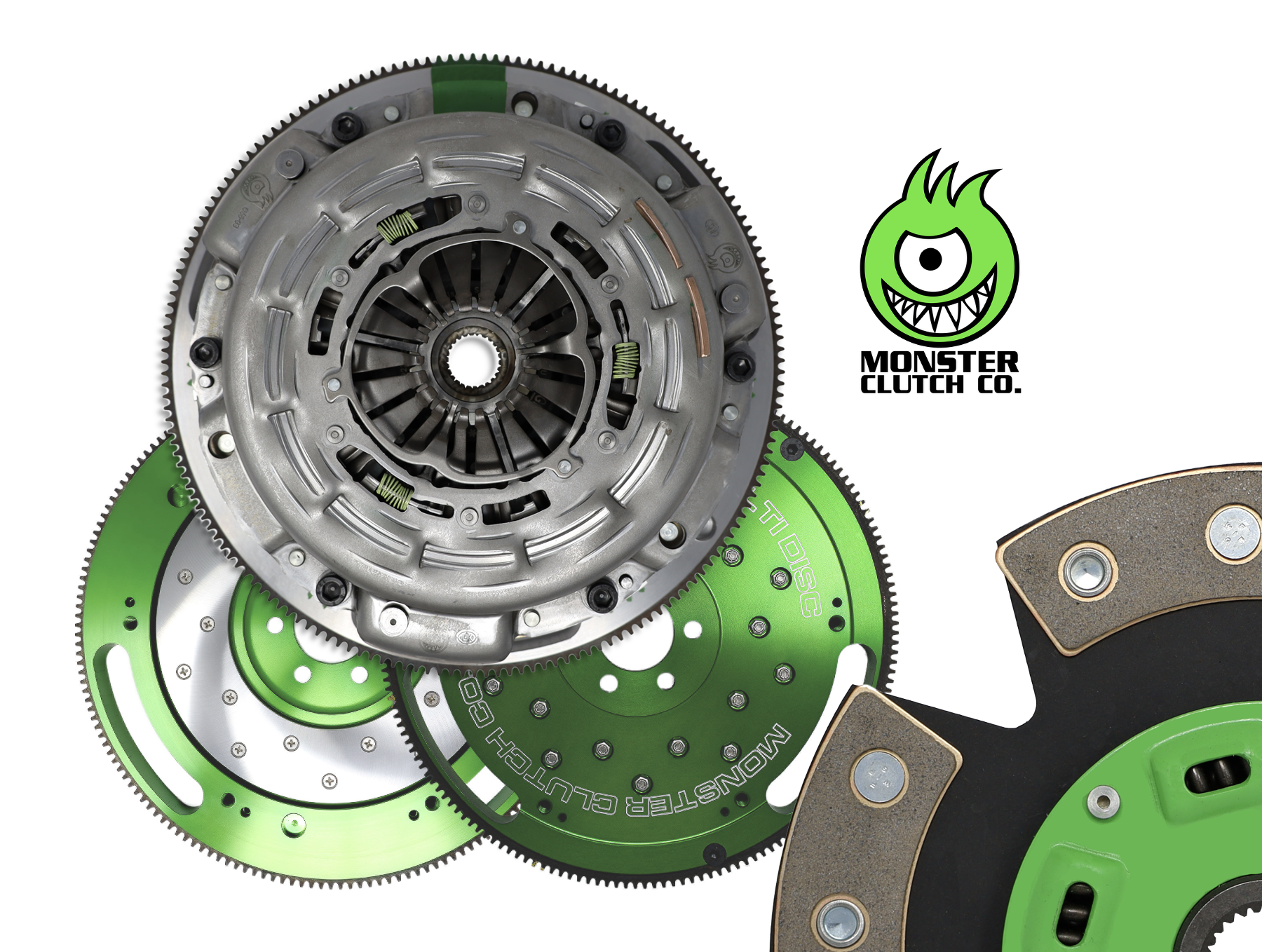
When it comes to going fast… there are few things more critically important to getting all that power you have been laser focused on making that your clutch. Considering how important of a role it plays from racing to stop and go traffic it’s a wonder why so many people forget to address it when budgeting a build. Luckily, when it comes time to upgrade, or you dumped the clutch one too many times, we have just the clutch you need for your 6th. Gen. Camaro ZL1… the infamous MONSTER TRIPLE DISK. Like all great products you have options from MILD to WILD. Lets explore the (4) flavors down below…
Monster S Series - Triple Disc Clutch - 550 - 1150 RWHP/RWTQ
The “big brother” to the S Series twin, the S Series triple utilizes the same technology but has the added bonus of being able to hold up to 1,100 rwhp/rwtq! Monster starts by using a factory GM LT1 based pressure plate setup and modifies the lift/release as well as plate load to increase performance – all while leaving the pedal effort 100% factory. Monster also adds a very beefy floater plate that won’t warp and leave you fighting release issues, and includes a long splined custom disc set that keeps rotational mass at a minimum, which helps translate to better high rpm release and happier transmission internals. These units have all the designed benefits of a factory unit with the ability to take serious abuse and generate a clean release with all GM factory based hydraulics up to 7000 rpm! Monster then wraps these assemblies up using their patent-pending CNC machined billet steel flywheel to convert them to work in numerous applications, which are all all balanced to less than 0.100 OZ/IN at no additional charge.
Long life, great performance, and factory driving characteristics are all things you can expect from the S Series triple disc clutches. While they will absolutely take a tremendous amount of abuse the only thing we don’t recommend with the S Series triple is drifting. The rigours of drifting do not do well with full-faced frictions, beyond that we highly recommend them for all other usages as long as you’re within the power rating. These units not only thrive on the street where stop and go traffic are just as easy as driving a factory car, but they also do great at the drag strip with numerous recorded 8 second passes, as well as the road course/HPDE/autocross track which allows you to take advantage of the reduced MOI and excellent high rpm release you can rest easy knowing they are up for the task, and will still get you home.
When installed and broken in properly you should expect factory smooth operation and no chatter with a factory pedal effort and engagement feel – the only exception to this is if you are using an aftermarket master cylinder as the larger displacement will increase pedal effort and reduce the engagement window.
Monster SK Series - Triple Disc Clutch - Rated to 1300 RWHP/RWTQ
The “big brother” to the SK Series twin, the SK Series triple utilizes the same technology but has the added bonus of being able to hold up to 1,300 rwhp/rwtq! Monster starts by using a factory GM LT1 based pressure plate setup and modify the lift/release as well as plate load to increase performance – all while leaving the pedal effort 100% factory. With the addition of our Kelvar™ material, this allows them to move the power rating up 150 hp/tq from the carbon organic S series and give customers another option at this common power rating. They add a very beefy floater plate that won’t warp and leave you fighting release issues which translates to better high rpm release and happier transmission internals. These units have all the designed benefits of a factory unit with the ability to take serious abuse and generate a clean release with all GM factory based hydraulics to 7000 rpm!
Long life, great performance, and factory driving characteristics are all things you can expect from the SK Series triple disc clutches. While they will absolutely take a tremendous amount of abuse the only thing we don’t recommend with the SK Series triple is drifting. The rigours of drifting do not do well with full-faced frictions, beyond that we highly recommend them for all other usages as long as you’re within the power rating. These units not only thrive on the street where stop and go traffic are just as easy as driving a factory car, they also do great at the drag strip with numerous recorded 8 second passes, as well as the road course/HPDE/autocross track which allows you to take advantage of the reduced MOI and excellent high rpm release you can rest easy knowing they are up for the task, and will still get you home.
When installed and broken in properly you should expect factory smooth operation and no chatter with a factory pedal effort and engagement feel – the only exception to this is if you are using an aftermarket master cylinder as the larger displacement will increase pedal effort and reduce the engagement window.
Monster SC Series - Triple Disc Clutch - Rated to 1,500 RWHP/RWTQ
Pushing in excess of 1,200rwhp or ready to drift, then you should consider the SC Series Clutch. Designed to handle up to 1,500rwhp using Monster’s proprietary ceramic based lightweight friction discs that allow it to hold more power and abuse while keeping the rotational mass at a minimum – this translates to better high rpm release and happier transmission internals. These units have all the designed benefits of a factory unit with the ability to take serious abuse and generate a clean release with all GM factory based hydraulics to 7,500 rpm!
While these are great for the abuse and extreme driving conditions, these are not going to drive perfectly in daily driven applications. What do we mean? It’s going to occasionally chatter/shudder during take-off and will have a slight on/off feel to it. This is a necessary byproduct of a clutch that will hold an honest 1,500 rwhp/rwtq. We recommend this clutch for any type of power adder in a racing or aggressive street application as long as you’re within the power rating of the clutch – this provides an excellent clutch for those looking to hold big power and abuse. These units not only work on the street, they are very much at home at the drag strip with numerous recorded low 8 second passes, as well as the road course/HPDE/autocross track which allows you to take advantage of the reduced MOI and excellent high rpm release you can rest easy knowing they are up for the task, and will still get you home.
When installed and broken in properly you should expect slight amounts of chatter/shudder and a slight on/off engagement with factory pedal effort – the only exception to this is if you are using an aftermarket master cylinder as the larger displacement will increase pedal effort and reduce the engagement window.
Monster R Series - Triple Disc Clutch - Rated to 1800+ RWHP/RWTQ
If you are wondering what the “R” stands for… it’s RIDICULOUS. Which is what I would call you, if you ever asked me to sit shot-gun in your 1,800rwhp Camaro, while you set the world record for H pattern diaphragm clutches like MONSTER has done… which is just another way of saying the obvious; these units are designed for the serious racer, with some serious skills. The R Series triple disc clutches are designed for extreme racing conditions, mainly drag racing, with the ability to hold ~2,000 rwhp/rwtq with no regard for daily driving characteristics in any way. We started with the same GM LT1 based pressure plate assembly and made a TON of changes to the unit to ensure that the lift/release and plate load are all maximized to provide the absolute best performance available. We don’t care if it chatters/squeals or is aggressive, they’re a no-nonsense and unapologetic design for the intention of one thing – to run sub-8 second quarter mile passes as a diaphragm (non-slipper) setup.
While these are great for the extreme driving conditions, these are not designed for a daily driven application. Why? Because this is a race clutch built for racing. Can you drive it on the street? Sure, but please don’t call us complaining that it’s too aggressive and loud – consider yourself warned. We recommend this clutch for any type of power adder in a racing application as long as you’re within the power rating of the clutch – this is the best clutch on the market for what it’s designed for and we’ve got the records to prove it. These units are very much at home at the drag strip with numerous recorded 7-second passes!
We recommend the use of face-plated transmissions and upgraded clutch hydraulics to maximize the potential of these setups, when installed and broken in properly you should expect it to drive like a race car, see our explanation above.
EACH PACKAGE INCLUDES;
– Monster Clutch Assembly (choice one of four options)
– NEW OEM Slave Cylinder (optional upgraded bearing support)
– 20lb. Billet steel flywheel (optional lightweight aluminum flywheel)
– GM OEM Pilot bearing
– Plastic Alignment tool
– Hardware
OPTIONAL BILLET BEARING SUPPORT $90
It’s no secret that the latest generation of slave cylinders GM has been putting in their performance cars have drawbacks. While the newer slave cylinders did much to alleviate some issues the older units had they actually have a much more severe issue to deal with. Many of the aftermarket companies are blaming the entire bearing assembly for failure. Upon research, we’ve discovered that the bearing itself isn’t the issue it’s the plastic bearing support piece upon which the bearing rides. This piece, when hot enough, disintegrates and causes some pretty catastrophic failures. This not only kills the slave cylinder, it also almost simultaneously kills the clutch in the process. Our billet bearing support eliminates this failure since it replaces the weak plastic piece with our custom piece machined from a solid chunk of USA made 6061T6 aluminum – gone will be the issues of melting plastic when our support is installed.
OPTIONAL 36” REMOTE BLEEDER $50
We recommend you flush and bleed your hydraulic system every track outing, or at the very least every other oil change. By using a remote bleeder it allows you to do this maintenance from under the hood instead of under the car, additionally it keeps the fluid run off out of the bellhousing and away from your clutch – this is critical. Our standard remote bleeders require two people, one in the vehicle pumping the clutch pedal and one at the end of the line cycling the fitting, these are robust and long lasting and the most recommended version by our users.
OPTIONAL MASTER SHIM SET $50
Master Shim Kit from Monster Clutch Company – your go-to solution for precise clutch adjustments. Fine-tune your clutch system effortlessly, with precision-cut shims and top-quality materials, achieve optimal performance under any driving conditions. Kit Includes – 0.040, .080, .090, .125” Shims.
OPTIONAL ULTRA LIGHTWEIGHT FLYWHEEL $150
The perfect way to help offset the extra weight of the heavier triple disk set-up. Seriously… the total weight of the Triple S + Ultra Lightweight Flywheel weights 17lbs less than the OEM dual disk! That only $126 per pound of weight savings. Please note, not all aluminum flywheels will ship with the green anodizing, based on the anodizing lead time. if the green color is important to your build, please email me so I can convey that to Monster when we place the order.
MONSTER FAQ’s; Can be found HERE.
MONSTER INSTRUCTIONS; Can be found HERE.
FITMENT; 2016-2024 6th Gen. Camaro (Manual Transmission Only)
NEED A MONSTER CLUTCH FOR ANOTHER VEHICLE? Email HERE and I can send you an invoice.
Monster Triple Disk Clutch Package
When it comes to going fast… there are few things more critically important to getting all that power you have been laser focused on making that your clutch. Considering how important of a role it plays from racing to stop and go traffic it’s a wonder why so many people forget to address it when budgeting a build. Luckily, when it comes time to upgrade, or you dumped the clutch one too many times, we have just the clutch you need for your 6th. Gen. Camaro ZL1… the infamous MONSTER TRIPLE DISK. Like all great products you have options from MILD to WILD. Lets explore the (4) flavors down below…
from $2,150.00
6th Gen Camaro Clutch Upgrade Guide: How to Choose the Right Monster Triple Disc Clutch
You Can Build a 1,000 Horsepower Camaro…and Still Hate Driving It
Choosing the wrong clutch is one of the most common—and expensive—mistakes Camaro enthusiasts make.
Many buyers focus on one specification: Horsepower Rating
While torque capacity certainly matters, it's only one piece of the equation.
A clutch influences nearly every aspect of how your Camaro feels behind the wheel:
Pedal effort
Engagement characteristics
Street manners
Heat tolerance
Launch consistency
Shift quality
Long-term durability
The wrong clutch can turn an otherwise enjoyable street car into something that's frustrating to drive in traffic. On the other hand, the right clutch should almost disappear during normal driving while giving you complete confidence every time you put your foot to the floor.
At Griffin Motorsports, we've found that most customers don't actually need the most aggressive clutch available—they need the clutch that best matches how they use their Camaro.
That's exactly what this guide is designed to help you determine.
Quick Take
If you're looking for the short version, here's a quick reference before we dive into the technical details.
| Driving Style | Recommended Friction Material |
|---|---|
| Daily Driver | Organic |
| Weekend Street Car | Kevlar |
| Aggressive Street / Roll Racing | Ceramic |
| Dedicated Drag Car | Metallic |
| 900–1,200+ RWHP Competition Car | Metallic (application dependent) |
Horsepower alone should never determine clutch selection.
A 750 RWHP daily driver has very different needs than a 750 RWHP drag car on slicks.
Throughout this guide we'll explain why.
Why Clutch Selection Matters
Many enthusiasts don't think about their clutch until it starts slipping.
Unfortunately, by that point the conversation usually becomes:
"What's the biggest clutch I can buy?"
That isn't always the right question.
A better question is:
What clutch will perform best for the way I actually drive my car?
Your clutch is the only mechanical connection between your engine and the transmission.
Every pound-foot of torque your LT1, LT4, or aftermarket combination produces must travel through this assembly before reaching the rear tires.
That means your clutch has to manage several competing priorities simultaneously:
Hold substantial torque without slipping.
Survive repeated heat cycles.
Engage predictably.
Maintain reasonable pedal effort.
Deliver smooth drivability.
Provide long service life.
Optimizing one of these characteristics often requires compromise in another.
For example:
A clutch designed to withstand repeated 7,000 RPM launches on drag slicks will generally behave differently than one optimized for thousands of miles of daily commuting.
Likewise, a clutch built for stop-and-go traffic won't necessarily tolerate repeated abuse on a road course.
Understanding these tradeoffs is the key to selecting the right clutch—not simply the strongest one.
Griffin Motorsports Insight
One of the biggest misconceptions we encounter is that "more clutch is always better."
In reality, the best clutch is the one you don't have to think about.
During normal driving, it should engage smoothly, shift predictably, and feel natural. When it's time to make a full-power pull or launch the car, that's when its engineering should quietly do its job.
If your clutch constantly reminds you it's there, it may not be the best match for your application.
When Does a Camaro Actually Need a Triple Disc Clutch?
Triple-disc clutches have become increasingly popular in the Gen V Camaro world, but many enthusiasts aren't entirely sure why.
The answer isn't simply:
"Because they hold more power."
While that's true, the real advantages go much deeper.
A triple-disc clutch increases the total friction surface area available to transfer engine torque.
Rather than relying on one or two friction discs, torque is distributed across three separate friction interfaces.
This provides several significant benefits:
Increased torque capacity
Better heat distribution
Improved resistance to clutch fade
Reduced likelihood of slipping
Lower clamp load requirements for comparable holding power
That last point surprises many enthusiasts.
Because additional friction area is available, engineers often don't need to rely solely on dramatically increasing pressure plate clamp load to achieve higher torque capacity.
The result can actually be a clutch that holds substantially more power without requiring dramatically higher pedal effort.
That's one reason modern triple-disc clutches have become so popular among high-horsepower street cars.
Do You Actually Need One?
Not every Camaro requires a triple-disc clutch.
If your vehicle is close to factory power levels and primarily sees normal street driving, an upgraded single or twin-disc clutch may provide excellent performance while reducing overall cost.
However, as power levels increase—or driving becomes more demanding—a triple-disc design begins offering meaningful advantages.
A triple-disc clutch becomes increasingly worthwhile if your Camaro regularly sees:
750+ RWHP
Drag radial or slick tire launches
Roll racing
Road course events
Standing mile competition
Heavy vehicle weight
Frequent high-RPM shifting
Forced induction
Nitrous oxide
Even if you never visit a drag strip, repeated high-load acceleration generates substantial heat.
Managing that heat is one of the primary reasons many high-performance street cars benefit from triple-disc technology.
Twin Disc vs. Triple Disc
This is one of the most common questions enthusiasts ask before purchasing a clutch.
On the surface, the answer seems obvious. Three discs must be better than two… Right? Not necessarily. The answer depends entirely on your application.
In the next section, we'll break down exactly how twin-disc and triple-disc designs differ, how friction materials influence clutch behavior, and why the "best" clutch isn't always the one with the highest torque rating.
Twin Disc vs. Triple Disc: What's the Difference?
One of the most common misconceptions in the performance world is that a triple-disc clutch simply exists to hold more horsepower.
While increased torque capacity is certainly one advantage, it isn't the reason so many high-performance street cars, road race cars, and drag cars have moved toward triple-disc designs.
The real advantage comes from how the clutch transfers power and manages heat. To understand why, let's start with the basics.
Surface Area Is Everything
A clutch works by squeezing friction material between the flywheel and pressure plate. The more usable friction surface available, the more torque the clutch can transfer before slipping.
A single-disc clutch has one friction disc. A twin-disc clutch has two. A triple-disc clutch has three.
That additional friction surface allows engineers to achieve higher torque capacity without relying solely on dramatically increased pressure plate clamp load.
The result is a clutch that can often:
Hold substantially more power
Manage heat more effectively
Reduce clutch fade
Improve longevity
Maintain surprisingly reasonable pedal effort
This is one of the reasons many enthusiasts are shocked by how street-friendly a properly engineered triple-disc clutch can feel.
Why Heat Matters
Every time you slip the clutch leaving a stoplight… Every launch at the drag strip… Every aggressive 2-3 powershift… Every road course session…
You're generating heat.
Heat is the enemy of every clutch. As temperatures rise, friction materials begin changing characteristics.
Too much heat can result in:
Clutch fade
Glazing
Premature wear
Warping
Reduced holding capacity
Inconsistent engagement
Because a triple-disc clutch spreads that heat across three friction interfaces instead of one or two, temperatures remain more controlled under demanding conditions.
For enthusiasts making significant horsepower, this often translates into greater consistency and a longer service life.
Pedal Effort: The Biggest Surprise
Many people assume: Triple Disc = Extremely Heavy Pedal. Fortunately, modern clutch engineering has changed that.
Since additional friction area is available, manufacturers often don't need to dramatically increase clamp load to achieve the desired torque capacity.
That means a properly engineered triple-disc clutch can actually feel remarkably civilized during everyday driving.
This is especially important for owners who:
Commute regularly
Sit in traffic
Attend weekend cruises
Drive hundreds of miles to Camaro events
The best performance parts shouldn't make you dread driving your car.
Griffin Motorsports Insight
One of the biggest compliments we hear after a customer installs the correct clutch isn't: "It holds a ton of power." It's: "I can't believe how normal it feels."
That's exactly what you should be looking for.
A properly selected clutch should disappear during everyday driving and only remind you it's there when you're asking it to transmit hundreds—or even thousands—of horsepower.
Twin Disc vs. Triple Disc Comparison
| Feature | Twin Disc | Triple Disc |
|---|---|---|
| Torque Capacity | Excellent | Outstanding |
| Heat Capacity | Very Good | Excellent |
| Street Manners | Very Good | Excellent |
| Launch Consistency | Very Good | Excellent |
| Pedal Effort | Moderate | Moderate |
| Road Course Performance | Very Good | Excellent |
| Drag Racing | Excellent | Excellent |
| High Horsepower Builds | Good | Outstanding |
| Long-Term Heat Management | Good | Excellent |
Neither design is automatically "better."
The right choice depends on:
Power level
Intended use
Tire choice
Vehicle weight
Driving habits
Future upgrade plans
Understanding Friction Materials
If clutch design determines how much power a clutch can hold…
The friction material determines how that clutch behaves every single time you press the pedal.
This is where many purchasing decisions go wrong.
Two triple-disc clutches may have identical torque ratings yet feel completely different behind the wheel simply because they're built using different friction materials.
Understanding those materials is the key to choosing a clutch you'll actually enjoy living with.
Organic Friction Material
Best For
Daily drivers
Weekend cruisers
Mild bolt-on Camaros
Lightly modified LT1s
Street-focused ZL1s
Organic friction material is designed with drivability as the highest priority.
Engagement is smooth. Takeoffs are predictable. Pedal modulation is forgiving.
That makes organic an excellent choice for enthusiasts who spend far more time on public roads than at the drag strip.
If you've ever driven a factory Camaro clutch, an organic clutch will generally feel the most familiar.
Advantages
Smooth engagement
Excellent street manners
Minimal chatter
Easy modulation
Comfortable in traffic
Long service life under normal use
Tradeoffs
Organic friction material sacrifices some heat resistance compared to more aggressive compounds.
Repeated hard launches or extended track sessions can eventually exceed its ideal operating range.
For many enthusiasts, however, that limitation never becomes relevant.
Griffin Motorsports Insight
Don't confuse "street friendly" with "weak."
A properly engineered organic triple-disc clutch can comfortably support impressive horsepower while still providing excellent drivability.
For many customers, it's the clutch they'll enjoy the most over the next 50,000 miles—not necessarily the one with the biggest number on the spec sheet.
Kevlar Friction Material
Best For
Aggressive street cars
Weekend racers
Roll racing
High-horsepower daily drivers
Occasional drag racing
Kevlar occupies one of the most attractive positions in the performance clutch market.
It offers noticeably greater heat resistance than organic material while retaining many of the smooth engagement characteristics enthusiasts appreciate on the street.
Think of Kevlar as the bridge between comfort and competition.
Drivers who routinely make spirited pulls, attend weekend events, or participate in occasional racing often find Kevlar to be an outstanding compromise.
Advantages
Higher heat tolerance
Excellent longevity
Smooth engagement
Improved wear resistance
Excellent for mixed street and competition use
Tradeoffs
Although still highly streetable, Kevlar generally produces slightly firmer engagement than organic material.
Drivers seeking the absolute smoothest clutch possible may still prefer organic, while those demanding maximum performance may step up to ceramic.
Why Many Enthusiasts Choose Kevlar
If someone asked us for one clutch capable of doing almost everything well, Kevlar would be difficult to ignore.
It handles daily commuting. Weekend canyon drives. Roll racing. Occasional drag strip outings. Long road trips.
And it does so without feeling like a dedicated race clutch.
For enthusiasts who genuinely use their Camaro for everything, Kevlar often represents one of the best balances available.
Ceramic Friction Material
Best For
High-horsepower street cars
Roll racing
Frequent drag strip visits
Aggressive drivers
Forced induction combinations
800–1,100+ RWHP applications
Ceramic friction material represents the point where performance begins taking priority over comfort.
That doesn't mean ceramic clutches are unpleasant to drive—but it does mean they ask a little more from the driver.
Compared to Organic and Kevlar compounds, ceramic materials provide significantly greater resistance to heat and clutch fade. They maintain consistent holding power under repeated abuse, making them an outstanding choice for Camaros that routinely see full-throttle acceleration, sticky tires, and aggressive shifting.
For many modern supercharged LT4 builds, ceramic has become the sweet spot between maximum performance and reasonable street manners.
Why Ceramic Performs So Well
The biggest advantage isn't simply that ceramic "holds more power."
It's that ceramic continues performing consistently after repeated heat cycles.
Imagine making three highway pulls...
Then another... Then another...
Or spending twenty minutes on a road course. Organic materials begin approaching their comfort zone. Kevlar continues performing well. Ceramic barely notices. That consistency is exactly what performance enthusiasts are paying for.
Advantages
Outstanding heat resistance
Excellent torque capacity
Consistent engagement under abuse
Excellent launch performance
Reduced clutch fade
Outstanding performance for forced induction combinations
Excellent durability when properly broken in
Tradeoffs
Ceramic isn't for everyone.
Compared to Organic or Kevlar:
Engagement is generally quicker.
Pedal modulation requires more precision.
Low-speed parking maneuvers may require slightly more driver attention.
Some clutch chatter can be normal depending on drivetrain configuration.
None of these characteristics make ceramic "bad."
They simply reflect a clutch optimized for performance rather than maximum comfort.
Griffin Motorsports Insight
One of the biggest misconceptions surrounding ceramic clutches is that they're impossible to street drive.
That simply isn't true.
Modern triple-disc ceramic clutches have come a long way. When paired with quality hydraulics, a properly adjusted clutch system, and an experienced driver, many owners are surprised by how manageable they are during normal street driving.
The real question isn't: Can I drive a ceramic clutch every day?
The better question is: Will I enjoy driving it every day?
That answer depends entirely on your expectations.
Metallic Friction Material
Best For
Dedicated drag cars
Competition vehicles
Standing mile competition
Extreme horsepower combinations
Slick-equipped race cars
1,000–1,500+ RWHP builds
Cars that prioritize winning over comfort
Metallic friction material sits at the extreme end of the performance spectrum.
This isn't a clutch chosen because it's "cool."
It's chosen because nothing else will reliably survive the abuse.
When horsepower levels become truly extreme, or the vehicle repeatedly experiences violent launches on slick tires, metallic friction materials provide unmatched durability and torque capacity.
This is race hardware.
Designed for Maximum Performance
Metallic clutches aren't concerned with making a morning commute more enjoyable.
They're engineered to:
Transfer enormous torque
Resist repeated shock loading
Survive severe heat
Deliver repeatable launches
Maintain consistency under competition conditions
If Organic emphasizes comfort... Kevlar balances both worlds...
Ceramic favors performance... Metallic exists almost entirely for competition.
Advantages
Maximum torque capacity
Exceptional heat tolerance
Outstanding durability
Extremely resistant to glazing
Excellent launch consistency
Designed for repeated competition use
Tradeoffs
Like every engineering decision, there are compromises.
Drivers should expect:
More aggressive engagement
Increased drivetrain noise
More noticeable chatter
Less forgiving modulation
Reduced comfort in stop-and-go traffic
For someone building a dedicated race car... These aren't disadvantages. They're simply characteristics of purpose-built equipment.
Griffin Motorsports Insight
One of the biggest mistakes enthusiasts make is buying a race clutch simply because their favorite YouTuber or friend runs one.
Unless your Camaro actually lives at the race track, there's a good chance you'll enjoy driving your car much more with a less aggressive friction material.
Remember: A clutch should complement your driving style—not your ego.
Comparing All Four Friction Materials
| Characteristic | Organic | Kevlar | Ceramic | Metallic |
|---|---|---|---|---|
| Daily Driving | ★★★★★ | ★★★★☆ | ★★★☆☆ | ★☆☆☆☆ |
| Stop-and-Go Traffic | ★★★★★ | ★★★★☆ | ★★★☆☆ | ★☆☆☆☆ |
| Street Manners | ★★★★★ | ★★★★☆ | ★★★☆☆ | ★☆☆☆☆ |
| Heat Resistance | ★★☆☆☆ | ★★★★☆ | ★★★★★ | ★★★★★ |
| Launch Performance | ★★☆☆☆ | ★★★★☆ | ★★★★★ | ★★★★★ |
| Road Course | ★★☆☆☆ | ★★★★☆ | ★★★★★ | ★★★★★ |
| Drag Racing | ★★☆☆☆ | ★★★★☆ | ★★★★★ | ★★★★★ |
| Roll Racing | ★★★☆☆ | ★★★★★ | ★★★★★ | ★★★★★ |
| Pedal Modulation | ★★★★★ | ★★★★☆ | ★★★☆☆ | ★★☆☆☆ |
| Overall Comfort | ★★★★★ | ★★★★☆ | ★★★☆☆ | ★☆☆☆☆ |
Which Monster Triple Disc Is Right for YOUR Build?
Horsepower tells part of the story. How you use your Camaro tells the rest. Let's look at some common examples.
The Weekend Cruiser
Typical Build
Intake
Headers
E85
Camshaft
550–700 RWHP
Recommendation: Organic
If your Camaro spends most of its life on public roads, attends local Cars & Coffee events, and occasionally enjoys a spirited back-road drive, Organic provides excellent drivability while comfortably supporting substantial power.
The All-Around Street Car
Typical Build
Magnuson or Whipple
Ported blower
Camshaft
E85
700–900 RWHP
Recommendation
Kevlar
This is probably the most versatile category.
Weekend cruises.
Roll racing.
Long road trips.
Occasional drag strip visits.
Kevlar excels at doing everything well without feeling overly aggressive.
The Serious Street Performance Car
Typical Build
2650 Supercharger
Turbocharged LT4
Large lower pulley
Built engine
Drag radial
850–1,100 RWHP
Recommendation: Ceramic
This is where Ceramic really shines.
If your Camaro regularly sees repeated high-load acceleration and sticky tires, Ceramic offers the heat resistance and consistency needed while remaining surprisingly streetable for experienced drivers.
The Competition Car
Typical Build
Built engine
Slicks
Two-step
Trailered to events
1,000+ RWHP
Recommendation: Metallic
At this level, comfort has already taken a back seat.
Consistency. Repeatability. Durability.
Those become the priorities, and Metallic delivers.
Common Clutch Buying Mistakes
Investing in a premium clutch is a significant decision, and choosing the wrong one can dramatically impact how your Camaro drives every day. Over the years, we've seen a few common mistakes repeated time and time again. Fortunately, they're all easy to avoid with a little planning.
Mistake #1: Buying Based on Horsepower Alone
One of the biggest misconceptions in the performance world is that clutch selection should be based solely on horsepower.
Horsepower is certainly important, but it's far from the only factor.
Consider these two Camaros:
Car A: 750 RWHP daily driver on Michelin Pilot Sport 4S tires that sees mostly highway driving.
Car B: 750 RWHP drag car on slicks with a two-step, clutch dumps, and frequent launches.
Despite making identical power, these cars place completely different demands on the clutch.
Tire grip, vehicle weight, suspension setup, launch technique, and intended use all influence the amount of stress the clutch must withstand. A properly selected clutch should reflect your entire combination—not just the number on your dyno sheet.
Mistake #2: Choosing the Most Aggressive Friction Material
Many enthusiasts assume that the most aggressive clutch must automatically be the best.
Unfortunately, that's rarely true.
A metallic race clutch can be an excellent choice for a dedicated competition vehicle, but it may be frustrating to drive through rush-hour traffic. Likewise, a ceramic clutch that feels perfectly acceptable during spirited weekend drives may be unnecessary for a Camaro that spends most of its life commuting.
Choosing the right clutch isn't about buying the "biggest" option—it's about matching the friction material to the way you actually use your car.
Griffin Motorsports Insight
One of the most satisfying customer calls we receive isn't from someone who says, "My clutch holds 1,200 horsepower."
It's from the customer who says:
"I drove my Camaro 400 miles this weekend, hit a Cars & Coffee, made a few highway pulls, and it drove better than I ever expected."
That's the goal.
Mistake #3: Reusing Torque-to-Yield Flywheel Bolts
When replacing a clutch, many enthusiasts focus on the clutch assembly itself while overlooking the hardware that secures it.
Factory flywheel bolts are torque-to-yield fasteners. Once they've been stretched during installation, they are generally considered one-time-use hardware.
Reusing them introduces unnecessary risk—especially on higher-horsepower applications where clutch assemblies experience significantly greater shock loading.
Replacing them with premium fasteners, such as ARP Flywheel Bolts, is inexpensive insurance while the transmission is already out of the vehicle.
Mistake #4: Skipping the Break-In Period
Even the highest-quality clutch won't perform as designed if it's never properly broken in.
During the break-in process, the friction surfaces gradually mate to one another, creating consistent contact across the entire clutch assembly.
Repeated hard launches or aggressive shifting immediately after installation can generate excessive heat before the surfaces have fully seated, reducing both performance and service life.
Monster Clutch provides specific break-in recommendations for each clutch package, and those procedures should always take precedence. Taking the time to complete the recommended break-in period is one of the simplest ways to maximize clutch longevity and performance.
Mistake #5: Ignoring the Rest of the Drivetrain
A clutch doesn't operate in isolation.
As horsepower increases, additional drivetrain components are subjected to greater stress. Replacing the clutch provides an ideal opportunity to inspect—or upgrade—other critical components while everything is already accessible.
Supporting Upgrades While the Transmission Is Out
Removing the transmission is one of the more labor-intensive jobs on a manual Camaro. Because of the time involved, many experienced builders take advantage of the opportunity to address several related upgrades at once.
ARP Flywheel Bolts
Your flywheel is responsible for transmitting every ounce of engine torque into the clutch assembly.
Premium ARP Flywheel Bolts provide increased strength and consistent clamping force compared to factory torque-to-yield hardware, making them an excellent choice for both street and competition vehicles.
Recommended For:
Any clutch replacement
Forced induction applications
Drag racing
Road course vehicles
Future power upgrades
JXB Performance Driveshaft Carrier Support
As power levels increase, the factory center support bearing can experience additional movement under load.
The JXB Driveshaft Carrier Support helps stabilize the factory driveshaft assembly, reducing unwanted deflection during aggressive acceleration and improving overall driveline confidence on higher-horsepower builds.
This is one of those upgrades you'll appreciate every time the car hooks hard.
BMR Motor Mounts
Engine movement affects much more than driveline durability.
Excessive engine movement can influence shift quality, driveline alignment, header clearance, and overall drivetrain consistency.
Performance motor mounts help control unwanted engine movement while improving throttle response and drivetrain stability under acceleration.
For higher-horsepower Camaros, they're one of the most worthwhile supporting upgrades available.
BMR Driveshaft Safety Loop
If your Camaro regularly visits the drag strip, a driveshaft safety loop isn't just a worthwhile upgrade—it may be required by your local racing organization.
In the unlikely event of a driveshaft failure, the safety loop helps prevent the front of the driveshaft from contacting the pavement, improving both vehicle control and driver safety.
It's inexpensive insurance for anyone serious about performance driving.
Final Thoughts
Choosing the right clutch is about much more than selecting the highest torque rating in a catalog.
The best clutch is the one that complements the way you actually use your Camaro.
Whether you're building a comfortable weekend cruiser, a 900 RWHP street machine, or a dedicated drag car, the ideal clutch should inspire confidence every time you press the pedal—not constantly remind you that it's there.
At Griffin Motorsports, we believe performance parts should improve the entire driving experience, not just the dyno sheet. That's why we take the time to understand your combination, your driving style, and your long-term goals before recommending a clutch.
If you're still unsure which Monster Triple Disc clutch is the best fit for your Camaro, we're here to help.
We'll help you choose the right solution the first time—so you can spend less time second-guessing your purchase and more time enjoying every shift behind the wheel.
Frequently Asked Questions
-
Not necessarily.
If your Camaro is near factory power levels and primarily sees normal street driving, a quality single- or twin-disc clutch may be sufficient.
However, as horsepower, traction, and driving intensity increase, a triple-disc clutch provides significant advantages in torque capacity, heat management, and long-term durability.
-
Not always.
Modern ceramic triple-disc clutches are far more refined than many enthusiasts expect. While engagement is generally quicker than Organic or Kevlar materials, many owners comfortably daily drive ceramic-equipped Camaros.
The deciding factor isn't whether ceramic can be driven every day—it's whether its engagement characteristics match your expectations.
-
Not necessarily.
Because torque is distributed across three friction discs, manufacturers can often achieve higher holding capacity without dramatically increasing pressure plate clamp load.
The result is a clutch capable of handling substantially more power while maintaining surprisingly reasonable pedal effort.
-
Some drivetrain noise and clutch chatter are completely normal with many high-performance clutch systems.
The amount depends on:
Friction material
Flywheel design
Transmission characteristics
Engine idle quality
Driver technique
Many owners find that any additional noise quickly becomes part of the performance character of the car.
-
If the transmission is already removed and the release bearing has accumulated significant mileage, replacement is often worthwhile.
Replacing the release bearing during clutch installation can help avoid repeating the labor-intensive transmission removal later should the original component fail.
-
No. Factory flywheel bolts are torque-to-yield fasteners and are intended for one-time use.
Whenever possible, replace them with new hardware during clutch installation.
-
Service life depends heavily on driving style.
Under normal street driving, Organic and Kevlar materials often provide excellent longevity.
Aggressive launches, repeated slipping, excessive heat, and competition use will shorten the lifespan of any clutch regardless of friction material.
-
There isn't a universal answer.
The ideal clutch depends on your horsepower, tire selection, driving habits, future upgrade plans, and performance goals.
If you're unsure, we're happy to help you choose the combination that best fits your specific build.